Category: Uncategorized

Why Europe’s Three Major Mountain Ranges Are Leading the Solar Revolution
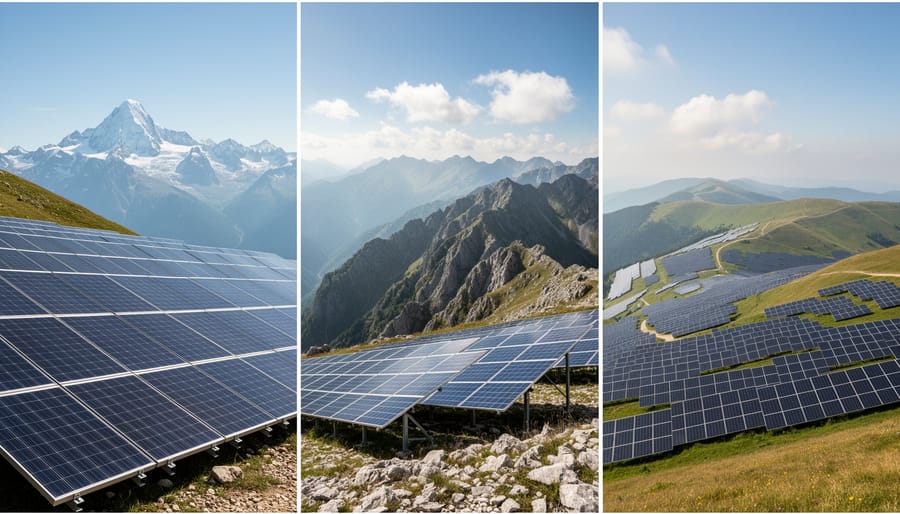
Solar panels installed on mountain slopes across three European ranges, with snowy alpine peaks and rolling hillside terrain under bright daylight.

Europe’s three major mountain ranges, the Alps, the Pyrenees, and the Carpathians, present distinct opportunities and challenges for solar energy installations, each shaped by altitude, climate, and terrain characteristics specific to their geography. While mountainous regions traditionally face concerns about shading, snow load, and installation complexity, modern solar technology combined with strategic site selection has proven these locations can deliver reliable energy production with proper planning and regional expertise.
The Alps, spanning eight countries and reaching elevations above 4,800 meters, offer exceptional …

Read more

What Is the Polar-Region Definition in Solar Energy?

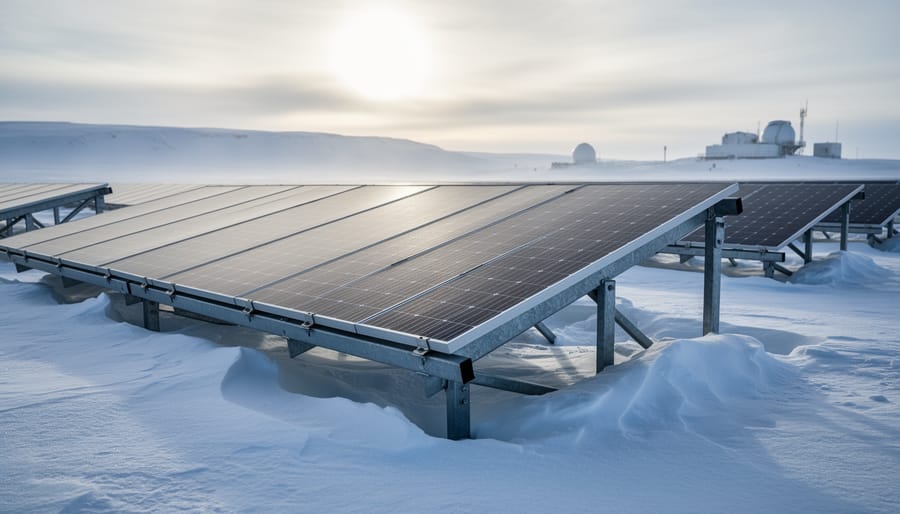
Solar panel array mounted on metal supports in a snowy polar landscape under cold Arctic daylight.

A polar region is any geographic area within the Arctic or Antarctic Circles, roughly above 66.5° latitude north or below 66.5° latitude south, characterized by extreme seasonal light variation, sub-zero temperatures for much of the year, and unique solar irradiance patterns. In solar technology, this definition matters because these zones present distinct challenges and opportunities that fundamentally change how photovoltaic systems are designed, installed, and operated.
Solar deployment in polar regions demands specialized …

Read more

Solar 4 America: How American Innovation Powers Europe’s Arctic Energy Future

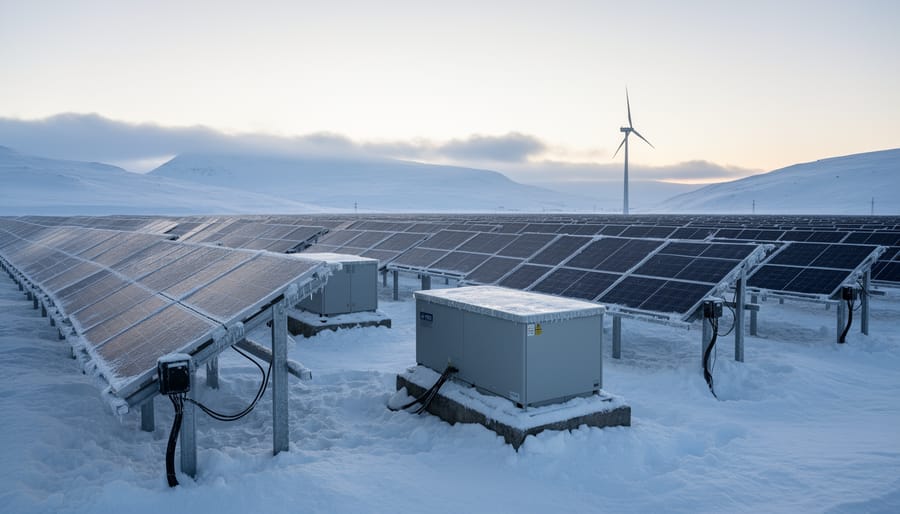
Cold-climate solar panels on snow in the Arctic with battery storage and a distant wind turbine under an overcast sky.

Solar 4 America represents a coordinated effort to deploy advanced photovoltaic systems specifically engineered for extreme cold, low-light conditions, and harsh weather typical of polar and sub-Arctic environments. These technologies tackle the unique challenges European Arctic operations face: panels that maintain efficiency at temperatures below -40°C, specialized mounting systems that withstand ice loads and hurricane-force winds, and energy storage solutions designed for extended periods of darkness. For European energy professionals, the initiative offers proven technical blueprints that translate directly to Scandinavia’s …

Read more

What Is Solar Energy in Zambia’s Mining Sector (and How Does It Work)?

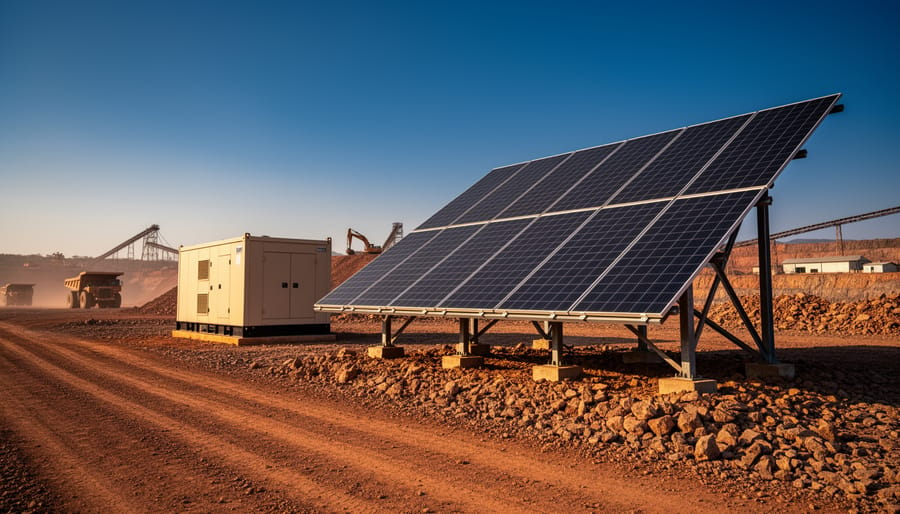
Solar panels installed near a copper mine site in Zambia beside mining equipment and a hybrid power setup suggestion.

Solar energy in Zambia’s mining sector refers to the deployment of photovoltaic systems and concentrated solar technology to power extraction, processing, and auxiliary operations at mine sites, reducing reliance on diesel generators and unstable grid connections while cutting operational costs and carbon emissions.
This energy shift matters because Zambia’s mining industry, which accounts for roughly 70% of the country’s export earnings, faces persistent electricity supply challenges that directly …

Read more

What Are Solar Cooling Systems (and How Do They Work)?

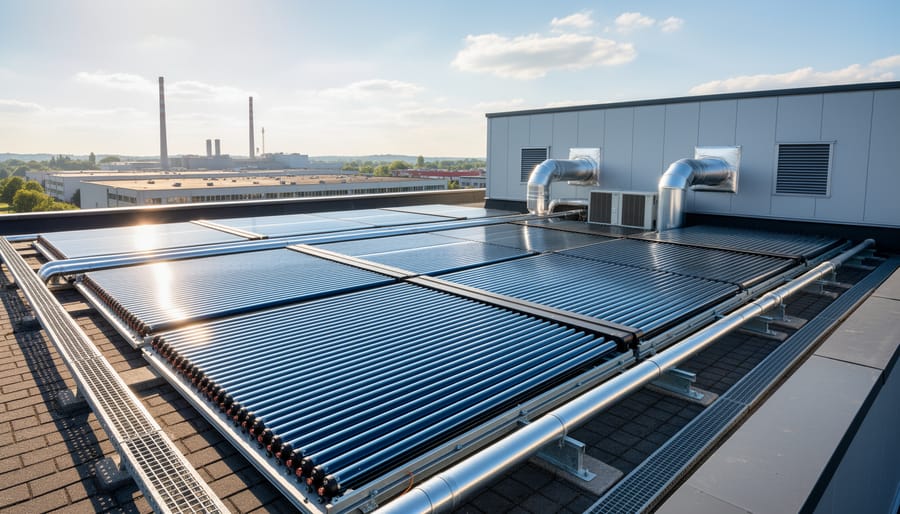
Rooftop solar thermal collectors and photovoltaic panels on a European industrial building powering a solar cooling system in summer daylight.

A solar cooling system uses solar energy to power refrigeration or air conditioning, converting heat from the sun into cooling capacity through thermal absorption or photovoltaic-driven compression. While it might seem counterintuitive to use the sun’s heat to cool buildings and industrial processes, this technology turns peak cooling demand into an opportunity: the strongest sunlight delivers the most cooling power precisely when it’s needed most.
For European industries operating energy-intensive facilities, cooling often represents a substantial operational cost. Metal processing plants, mining operations, food …

Read more