Why Brake Dust Bonds to Wheels and How Iron Removers Dissolve It
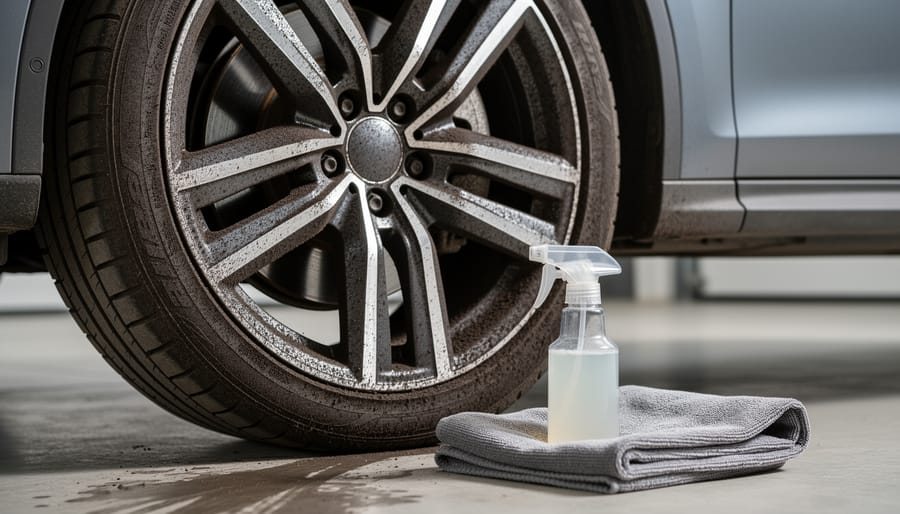
Brake dust bonds to wheels through a process of thermal fusion and chemical adhesion, creating a stubborn metallic film that ordinary cleaners cannot touch, while iron remover works by chelating ferrous particles and dissolving them at a molecular level. This bonding occurs when tiny iron particles from brake pads and rotors heat to extreme temperatures during braking, then embed themselves into wheel surfaces as they cool and oxidize. The result is a layer of rust-like contamination that resists soap, water, and elbow grease.
Iron removers solve this problem through a targeted chemical reaction. These specialized formulations contain active compounds that bind to iron oxide molecules, breaking the metallic bond with the wheel surface and turning the particles into a soluble purple or red liquid that rinses away cleanly. The transformation is both visible and satisfying, offering a clear indicator that the chemistry is working.
Understanding this science matters for anyone seeking efficiency in vehicle maintenance and industrial cleaning applications. Beyond aesthetics, brake dust accumulation can damage protective coatings and corrode alloy wheels over time, making removal not just cosmetic but essential for longevity. This article explains the material science behind both the problem and the solution, examines the different types of iron remover products available across European markets in 2026, and provides practical guidance for effective application.
What Brake Dust Bonding Means
Brake dust is the dark, gritty residue that accumulates on wheel surfaces as a direct result of the friction between brake pads and rotors during normal vehicle operation. Every time you press the brake pedal, microscopic particles shear off from both components and become airborne, eventually settling on the wheel rim where they form stubborn, discolored deposits that resist ordinary washing. This isn’t simple dirt that water can rinse away, brake dust creates a chemical bond with the wheel surface that requires specialized cleaning chemistry to break. Products like iron remover for cars use chelation chemistry to dissolve these metallic bonds without damaging the underlying surface.
Brake Dust
Fine metallic and carbon particles released when brake pads and rotors make contact under pressure and heat. These particles contain iron, carbon fibres, adhesive resins, and other friction material compounds.
Ferrous Contamination
The presence of iron-based particles embedded in or bonded to a surface. On wheels, this contamination appears as rust-colored spots or an overall brownish film that conventional detergents cannot remove.
Oxidation Bonding
The chemical process where iron particles react with oxygen and moisture to form iron oxide compounds that adhere to wheel surfaces. This creates a molecular-level attachment stronger than simple surface dirt.
Metallic Adhesion
The tendency of hot metal particles to bond with wheel substrates through a combination of mechanical embedding and chemical interaction. Heat from braking softens particles enough to penetrate microscopic surface irregularities and coating protection layers.
The composition of brake dust explains why it bonds so tenaciously. Iron particles make up roughly 40-60% of typical brake dust, with carbon fibres, metallic flakes, and adhesive compounds comprising the remainder. When braking generates temperatures between 200-400°C at the rotor surface, these materials don’t just land on your wheels, they arrive hot enough to initiate chemical reactions with the wheel finish. Pressure compounds the problem, forcing particles into microscopic pores and scratches in the wheel surface. As iron oxidizes rapidly in the presence of moisture and air, it forms rust-like bonds that essentially weld the contamination to the wheel, making proper wheel maintenance essential.
How Brake Dust Bonds to Wheels
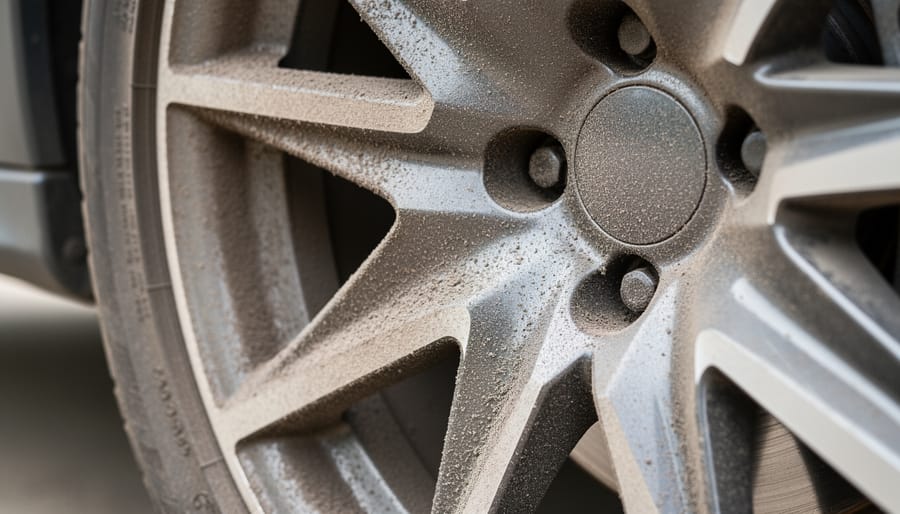
The Role of Heat and Friction
During braking, the friction between brake pads and rotors generates extreme localized temperatures, often exceeding 300°C and reaching 600°C under heavy braking conditions. These temperatures create a critical environment for brake dust bonding that goes far beyond simple surface contamination.
As brake pads compress against spinning rotors, microscopic iron particles shear off and become airborne while still superheated. When these molten or near-molten fragments strike cooler wheel surfaces, they undergo rapid thermal cycling. The sudden temperature drop doesn’t allow particles to bounce away. Instead, they partially fuse to the wheel’s protective coating or bare metal substrate, creating mechanical interlocking at the microscopic level.
This thermal bonding works like spot welding on an invisible scale. The heat softens both the iron particle and the wheel surface just enough for atomic-level contact. As everything cools within milliseconds, the materials contract together, forming a hybrid mechanical-metallurgical bond that resists conventional washing.
Repeated braking cycles compound the effect. Each stop deposits a fresh layer while reheating existing deposits, progressively building up tenacious films that standard detergents cannot penetrate. The friction-generated heat doesn’t just deposit particles, it fundamentally changes how they adhere.
Chemical Oxidation and Rust Formation
Once brake dust particles settle on a wheel surface, the real bonding problem begins. Iron, the primary metallic component in brake dust, reacts with oxygen and water vapour almost immediately. This oxidation process transforms metallic iron (Fe) into iron oxide (Fe₂O₃ or Fe₃O₄), commonly known as rust, which chemically binds to the wheel substrate rather than simply resting on top of it.
The chemistry happens quickly. Moisture from rain, road spray, or even morning dew catalyses the reaction, accelerating oxidation within hours of deposition. Unlike mechanical dirt that sits on a surface, iron oxide forms molecular bonds with the wheel coating, especially on porous or micro-scratched areas where oxidized particles can penetrate and anchor themselves at a microscopic level.
Temperature cycling makes the problem worse. Wheels heat during driving and cool when parked, causing expansion and contraction that drives oxidized particles deeper into surface irregularities. Over time, these iron oxide bonds become increasingly stubborn, resisting conventional cleaning methods that rely purely on surfactants or mechanical scrubbing. The oxidation essentially welds the brake dust to the wheel, creating a persistent metallic contamination that demands chemical intervention to reverse the bonding process.
Types of Iron Removers and Their Components
Acid-Based Formulations
Traditional acid-based iron removers rely on mild acidic compounds, typically formulations containing hydrofluoric acid derivatives, ammonium bifluoride, or phosphoric acid blends, to chemically attack iron oxide bonds. These products work by lowering pH at the contact surface, which accelerates the breakdown of rust structures and dissolves metallic deposits effectively within minutes.
The strength of acid-based formulations lies in their aggressive action against stubborn, heat-fused brake dust. Professional detailers and industrial maintenance teams favor these products for heavily contaminated surfaces where pH-neutral alternatives struggle. However, effectiveness comes with trade-offs: improper dilution ratios can damage wheel finishes, particularly on polished aluminium and anodized surfaces. Protective equipment, gloves and eye protection, is non-negotiable when handling concentrated formulations.
European markets have largely shifted toward safer alternatives, yet acid-based removers remain relevant for specialized applications where speed and power matter more than gentle chemistry.
pH-Neutral and Eco-Friendly Options
Modern pH-neutral iron removers represent a significant shift in cleaning chemistry, balancing effectiveness with environmental responsibility. These formulations typically use organic chelating agents like gluconic acid or biodegradable surfactants instead of harsh acids, achieving iron oxide dissolution without the corrosive risks of traditional products.
European manufacturers have pioneered water-based systems that meet stringent REACH and Biocidal Products Regulation requirements while maintaining the characteristic purple color-change reaction that indicates active iron removal. The absence of strong acids makes these products safer for sensitive wheel finishes, including powder-coated and anodized surfaces common on premium European vehicles.
Bio-based variants incorporate plant-derived solvents and renewable ingredients, reducing petroleum dependency and improving biodegradability. These innovations align with circular economy principles increasingly demanded by European fleet operators and industrial facilities prioritizing sustainability certifications. Though sometimes requiring slightly longer dwell times than acid-based counterparts, eco-friendly iron removers deliver comparable results without environmental compromise.
How Iron Removers Dissolve Bonded Brake Dust
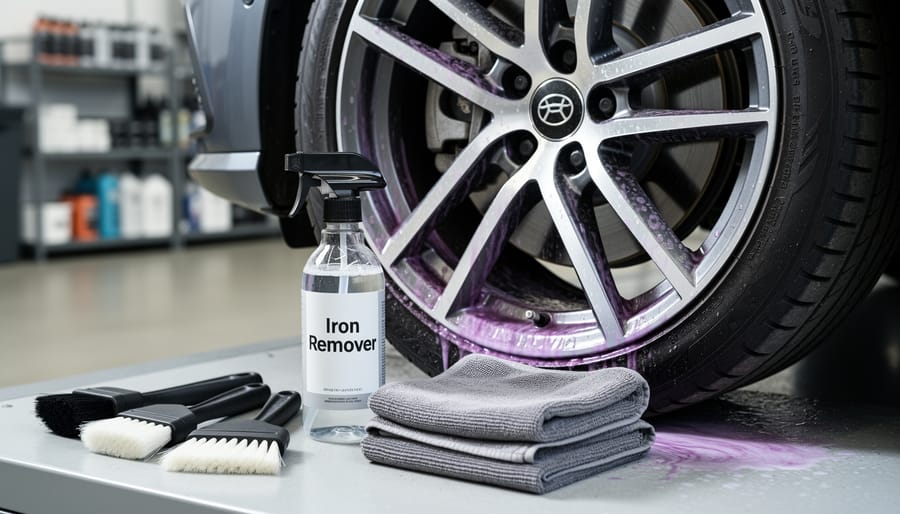
Iron removers work through a chemical process called chelation, which targets the iron oxide bonds holding brake dust particles to wheel surfaces. When you spray an iron remover onto a contaminated wheel, specialized molecules in the formula seek out iron ions embedded in the oxidized brake dust deposits.
The active ingredients, typically thioglycolic acid derivatives or similar chelating agents, have a unique molecular structure featuring multiple binding sites. These sites surround individual iron ions and form stable, water-soluble complexes that encapsulate the metal particles. Think of chelation as a chemical claw that grabs the iron and pulls it away from the wheel surface without needing mechanical scrubbing.
As the chelating agents attach to iron particles, they disrupt the oxide bonds connecting brake dust to the wheel coating. The remover breaks down the rust-like iron oxide layer by donating electrons that weaken the molecular structure. This electron exchange transforms insoluble iron oxide into a soluble iron complex that can be rinsed away with water. The chemical reaction happens within minutes, as the formula penetrates microscopic crevices where brake dust has embedded itself.
The distinctive purple color that appears during this process serves as a visual indicator that chelation is occurring. Iron removers contain pH indicators that react specifically with dissolved iron compounds, changing from clear or amber to deep purple or red as the solution becomes saturated with iron complexes. The more concentrated the contamination, the more dramatic the color shift. This visual feedback helps users gauge how much brake dust was present and confirms the product is actively working.
The entire dissolution sequence follows a predictable pattern: initial contact and wetting, chelation binding within thirty to sixty seconds, color change as iron complexes form, and finally the breakdown of remaining molecular adhesion. Modern formulations balance chemical effectiveness with safety, using concentrations strong enough to dissolve stubborn metallic bonds while remaining gentle on wheel finishes and safe for regular use when handled properly.
Applications Across Automotive and Industrial Sectors
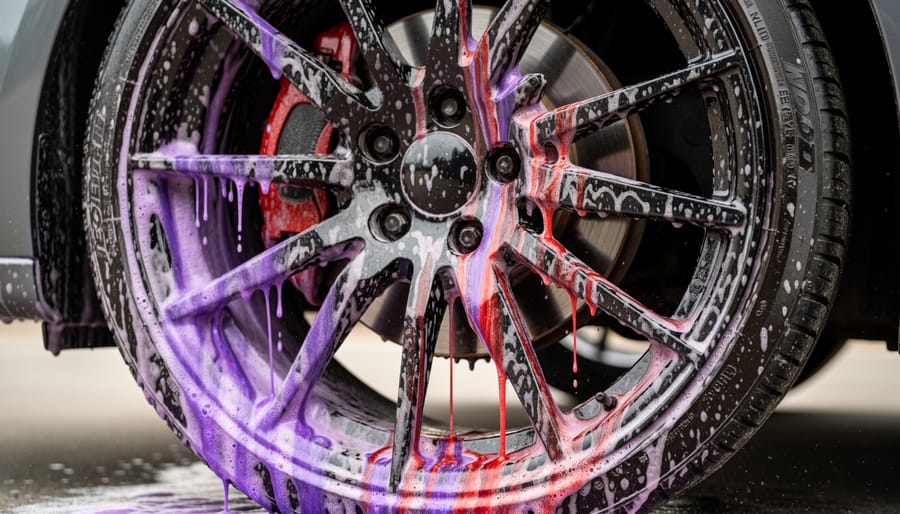
Iron removers have evolved far beyond their original niche in automotive wheel cleaning to become versatile tools across multiple European industries. Professional detailing shops routinely deploy these formulations to restore alloy wheels, remove embedded rail dust from vehicle paintwork, and prepare surfaces for ceramic coatings or polishing. Fleet operators managing delivery vans, buses, and commercial trucks integrate iron removers into scheduled maintenance programs, preventing corrosive buildup that can compromise wheel integrity and reduce replacement intervals by 20-30% when applied quarterly.
In manufacturing environments, metal fabrication facilities use iron removers to clean production equipment, removing accumulated iron particulates from cutting tools, grinding stations, and conveyor systems without harsh mechanical abrasion. The chemistry proves particularly valuable in stainless steel processing plants, where cross-contamination from carbon steel particles can trigger corrosion on finished products, a critical quality control concern for European manufacturers supplying precision components to automotive and aerospace sectors.
Common applications include:
– Automotive wheel cleaning and paint decontamination before protective coating application
– Fleet vehicle maintenance programs for logistics and public transportation operators
– Industrial equipment cleaning in metal processing and fabrication facilities
– Surface preparation for welding, painting, or quality inspection in manufacturing
– Railway and marine sector maintenance to remove embedded brake dust and rail dust from rolling stock and vessels
The mining and metals industries have adopted iron removers for DIY decontamination protocols on extraction equipment and processing machinery, where iron oxide deposits accumulate rapidly in harsh operational environments. European sustainability initiatives drive demand for pH-neutral, biodegradable formulations that meet REACH compliance while maintaining effectiveness, aligning chemical cleaning technology with circular economy principles and reduced environmental impact across industrial operations.
Safety and Environmental Considerations
Safe use of iron removers requires proper personal protective equipment, gloves and eye protection are essential, as even pH-neutral formulations contain active chelating agents that can irritate skin and mucous membranes. Always apply these products in well-ventilated areas or outdoors, since the chemical reaction releases compounds that shouldn’t be inhaled in confined spaces.
European regulations govern iron remover formulations strictly. Under REACH (Registration, Evaluation, Authorisation and Restriction of Chemicals) and CLP (Classification, Labelling and Packaging) frameworks, manufacturers must demonstrate ingredient safety and environmental impact. Products marketed across the EU carry standardized hazard labels and safety data sheets, ensuring users understand risks and handling requirements. This regulatory rigor drives innovation toward safer chemistries.
Disposal demands equal care. Never pour used iron remover solution down storm drains, as it contains dissolved heavy metals. In automotive workshops and industrial facilities, waste must be collected and treated as chemical waste, following local hazardous waste protocols. Many European municipalities provide designated collection points for such materials.
The industry is shifting rapidly toward bio-based and biodegradable formulations. Modern sustainable compliance sustainable compliance standards push manufacturers to develop iron removers using plant-derived chelating agents and water-based carriers, reducing toxicity without sacrificing effectiveness. This evolution reflects broader European commitments to circular economy principles and reduced chemical footprints, values that extend from automotive care to industrial processes and renewable energy sectors, where environmental responsibility shapes every operational decision.
Frequently Asked Questions
Choosing and using iron removers correctly can feel confusing, especially if you’re unfamiliar with the chemistry at work. Here are answers to the most common questions about brake dust bonding and iron removal products.
Why does the iron remover turn purple when sprayed on wheels?
The purple color indicates a chemical reaction between the remover and iron oxide deposits. As the chelating agents bond with iron particles and dissolve them, the resulting complex appears purple or red, confirming that the product is actively working on metallic contamination.
Is iron remover safe for all wheel types?
Most pH-neutral formulations are safe for painted, powder-coated, chrome, and clear-coated wheels when used as directed. However, acid-based products can damage delicate finishes or polished aluminum if left on too long, so always check manufacturer compatibility and test a small area first.
How often should I use iron remover on my wheels?
For typical driving conditions, every four to six weeks provides good protection without overusing chemicals. High-performance vehicles or those driven in dusty, mountainous areas may benefit from monthly applications, while light-use cars can extend intervals to eight weeks.
Can iron removers prevent future brake dust from bonding?
No, these products dissolve existing bonds but don’t create a protective barrier. Applying a dedicated wheel sealant or ceramic coating after cleaning can reduce future bonding by creating a smoother, less porous surface that resists particle embedding.
Some users ask about natural alternatives to chemical iron removers. While vinegar or lemon juice can dissolve light surface rust through mild acidity, they lack the chelating power to break strong metallic bonds effectively. For stubborn brake dust, purpose-formulated products remain the most efficient choice, particularly the modern bio-based options that balance effectiveness with environmental responsibility.
Understanding why brake dust bonds with such tenacity to wheel surfaces illuminates the elegant intersection of physics and chemistry. The extreme heat and friction generated during braking don’t merely deposit iron particles, they create molecular-level bonds strengthened by rapid oxidation. These rust-like connections transform simple metal dust into stubborn contaminants that resist conventional cleaning methods.
Iron removers represent a sophisticated chemical solution to this mechanical problem. Through chelation chemistry, these formulations break metallic bonds at the molecular level, converting insoluble iron oxide into water-soluble complexes. The dramatic purple reaction serves as both a visual indicator and proof of effective chemical dissolution.
This knowledge matters beyond automotive detailing. In industrial settings across Europe, from manufacturing facilities to fleet management operations, the same bonding and dissolution principles apply to equipment maintenance and metal processing efficiency. Understanding these mechanisms enables informed decisions about cleaning technologies that balance effectiveness with environmental responsibility.
The evolution toward pH-neutral and bio-based formulations reflects broader European commitments to sustainability and innovation. As cleaning technology advances, the focus remains on solutions that deliver results while minimizing environmental impact, principles that align with responsible industrial practices and the pursuit of efficiency through scientific understanding rather than brute force approaches.
Leave a Reply