What Is Solar Energy in Zambia’s Mining Sector (and How Does It Work)?
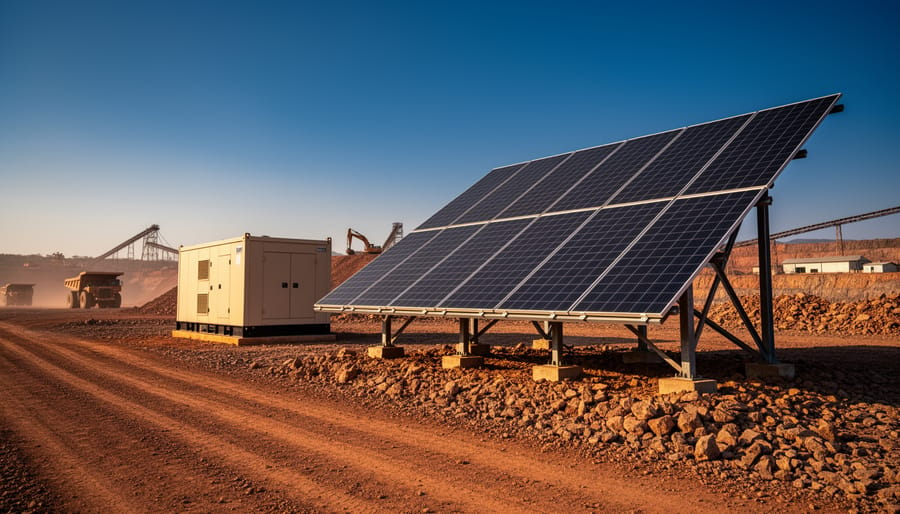
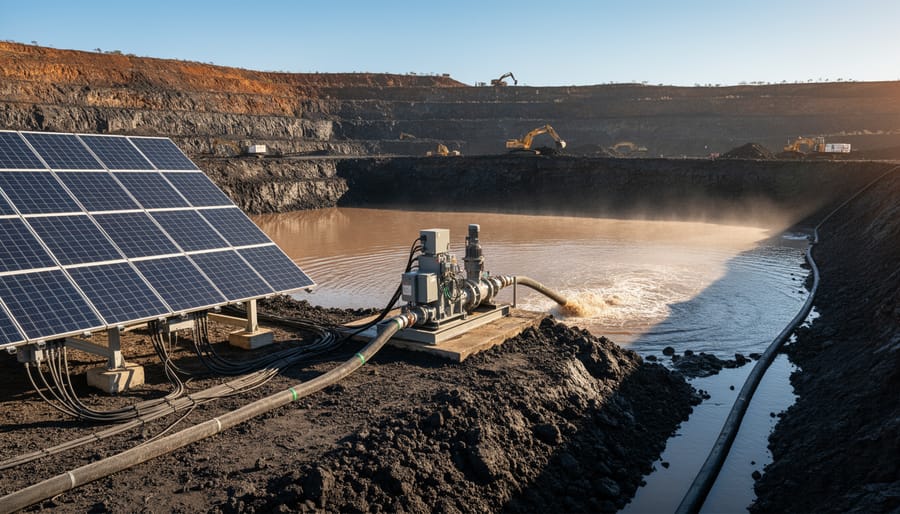
Solar energy in Zambia’s mining sector refers to the deployment of photovoltaic systems and concentrated solar technology to power extraction, processing, and auxiliary operations at mine sites, reducing reliance on diesel generators and unstable grid connections while cutting operational costs and carbon emissions.
This energy shift matters because Zambia’s mining industry, which accounts for roughly 70% of the country’s export earnings, faces persistent electricity supply challenges that directly impact productivity and profitability. Unreliable grid infrastructure and expensive diesel backup have long constrained operations, particularly at remote sites where fuel logistics add layers of cost and complexity. Solar technology now offers a viable alternative, with solar transforming mining operations across the continent by delivering reliable, scalable power tailored to the demanding requirements of mineral extraction.
For European technology providers, engineering firms, and investors exploring opportunities in this transition, understanding the practical application of solar in Zambian mining means examining not just the technology itself but the integration challenges, hybrid system configurations, and the specific operational contexts where renewable solutions deliver measurable returns. Zambia’s abundant solar resource provides an average of 2,000 to 3,000 sunshine hours annually, positioning the country as an ideal candidate for large-scale solar deployment.
This article unpacks how solar energy functions within mining operations, the types of systems currently deployed, real-world applications already delivering results, and the practical considerations that determine project success. Whether you’re assessing technical feasibility, exploring partnership opportunities, or seeking to understand the regulatory and financial landscape, the following sections provide the comprehensive foundation needed to engage confidently with solar electrification in Zambia’s critical mining sector.
Understanding Solar Energy in Zambia’s Mining Landscape
Solar energy implementation in Zambia’s mining sector represents a strategic convergence of abundant natural resources and pressing electrification needs. At its core, this approach harnesses photovoltaic technology to convert sunlight into electricity that powers mining operations, from exploration camps to full-scale extraction facilities. Unlike traditional renewable energy in mining applications, Zambia’s deployment focuses on addressing both energy security and cost challenges unique to the country’s mining-dependent economy.
Zambia occupies an enviable position for solar development. Zambia’s solar irradiation levels average between 5.0 and 6.5 kWh per square meter daily across most mining regions, providing consistent energy potential year-round. This solar resource remains largely untapped despite the country’s status as Africa’s second-largest copper producer and a significant cobalt supplier. The Copperbelt Province, home to the majority of mining operations, receives particularly favorable irradiation that makes solar installations highly viable from a technical standpoint.
Understanding the terminology is essential for grasping this energy transition:
- Solar irradiation
- The amount of solar energy received per unit area, measured in kilowatt-hours per square meter per day. Higher irradiation levels indicate greater electricity generation potential from photovoltaic systems.
- Off-grid mining
- Mining operations that operate independently from the national electricity grid, typically relying on diesel generators or standalone renewable systems. These sites often face the highest energy costs and benefit most from solar integration.
- Hybrid energy systems
- Combined power solutions integrating solar panels with diesel generators or battery storage to ensure continuous electricity supply. This approach balances renewable generation with reliable backup power for 24-hour mining operations.
- Mining electrification
- The process of converting mining equipment and processes from diesel or manual operation to electric power. Electrification enables cleaner operations and creates opportunities for renewable energy integration.
The current energy landscape presents substantial challenges. Zambia faces persistent electricity reliability challenges with the national grid heavily dependent on hydroelectric generation vulnerable to drought conditions. Mining operations consume approximately 60 percent of Zambia’s total electricity supply, yet face frequent outages and high tariffs that impact production schedules and profitability. A single copper smelter can require 25-40 megawatts continuously, creating massive baseload demands that the constrained grid struggles to meet reliably.
This combination of abundant solar resources, energy-intensive mining operations, and grid limitations creates a compelling case for solar electrification as both an economic necessity and a pathway to operational resilience.
How Solar Electrification Works in Mining Operations
Solar-Diesel Hybrid Systems
Remote mining sites in Zambia have traditionally relied entirely on diesel generators for power, consuming thousands of litres daily and bearing substantial fuel transport costs to isolated locations. Solar-diesel hybrid systems change this equation by allowing photovoltaic arrays to supply electricity during daylight hours while diesel generators fill gaps during low-sun periods or handle peak demand.
The integration works through intelligent controllers that continuously monitor energy production from solar panels and power demand from mining equipment. When solar output exceeds immediate needs, the controller reduces diesel generator operation proportionally, cutting fuel consumption by 30-50% in typical installations. Excess solar energy charges battery banks that provide power during evening shifts or cloudy conditions, further minimising diesel runtime.
This hybrid approach addresses mining’s non-negotiable reliability requirements. Unlike pure solar systems, hybrids maintain uninterrupted operations because diesel generators automatically activate when solar and battery capacity prove insufficient. The configuration also extends diesel generator lifespan by reducing operating hours and thermal cycling stress. For Zambian operations hundreds of kilometres from fuel depots, eliminating even half the diesel deliveries translates to substantial cost savings and reduced logistical vulnerability.
Grid-Connected Solar Solutions
Grid-connected solar solutions enable Zambia’s larger mining operations to offset electricity costs while maintaining the reliability of the national grid as a backup power source. These systems feed solar-generated electricity directly into the mine’s internal distribution network during daylight hours, reducing the amount of power drawn from the grid. When solar production exceeds immediate demand, excess energy can be fed back to the grid through net metering arrangements, where available, or stored for later use.
For mining operations near existing transmission infrastructure, this configuration offers the most cost-effective path to renewable integration. The grid acts as a virtual battery, providing power during nighttime operations and cloudy periods while accepting surplus solar generation during peak production hours. This eliminates the need for expensive battery storage systems that off-grid sites require.
Installation typically involves mounting large solar arrays on available land near processing facilities or tailings areas, connecting through transformers and switchgear to the mine’s medium-voltage distribution system. Advanced monitoring systems track generation, consumption, and grid interaction in real-time, optimizing the balance between solar power utilization and grid dependence. The result: 30-50% reductions in grid electricity purchases while maintaining uninterrupted operations.
Types and Components of Solar Mining Electrification Systems
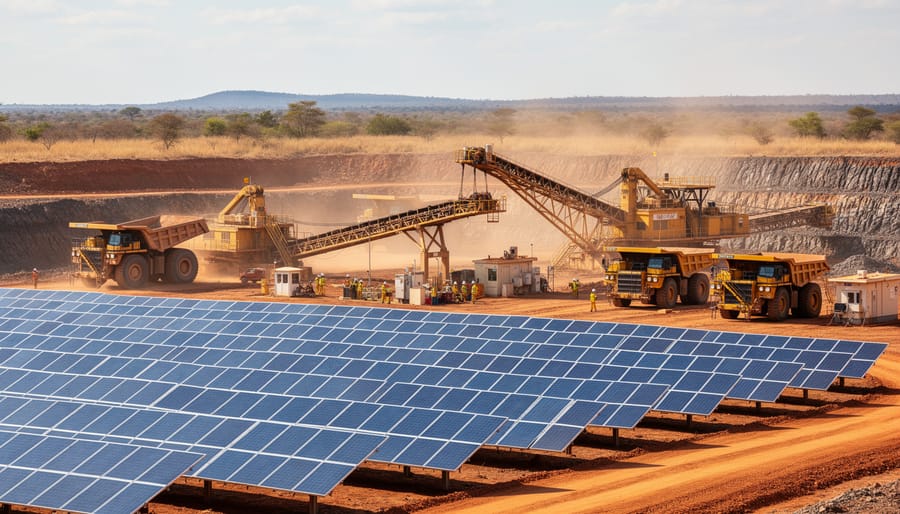
Off-Grid Solar Systems
Off-grid solar systems provide complete energy independence for remote mining sites in Zambia where grid connection is impractical or economically unfeasible. These standalone configurations combine solar panels with substantial battery storage to ensure continuous power supply during nighttime operations and cloudy periods.
Typical off-grid mining installations require battery banks sized to provide 24-48 hours of autonomy, accounting for mining equipment’s critical power needs and Zambia’s seasonal weather variations. Lithium-ion batteries are increasingly preferred over traditional lead-acid options due to their deeper discharge capabilities, longer lifespan, and reduced maintenance requirements in harsh mining environments.
Remote exploration camps and small-scale operations commonly deploy systems ranging from 10kW to 100kW capacity, powering essential equipment like drilling rigs, lighting, communication systems, and processing machinery. The initial capital investment includes charge controllers, battery management systems, and backup generators for extended periods of low solar production. Proper sizing is critical, undersized battery banks lead to premature failure, while oversized systems waste capital that could be invested in additional generating capacity.
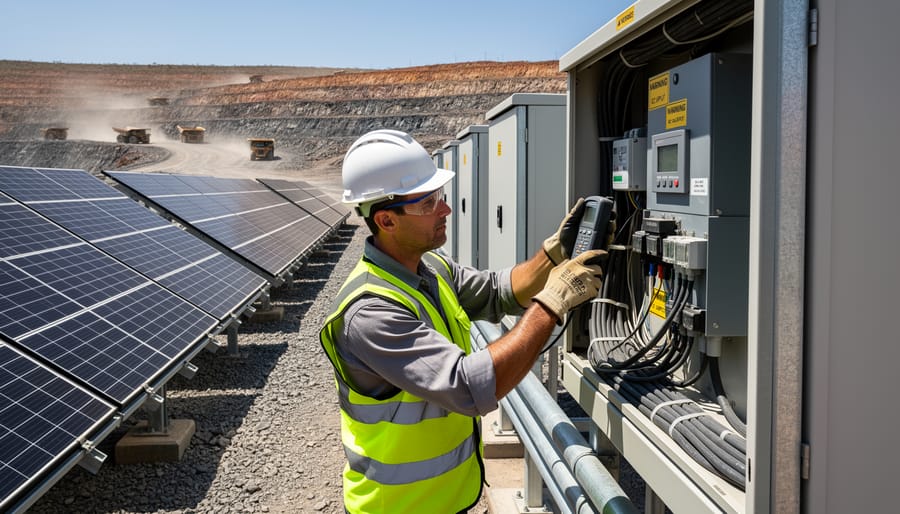
Hybrid Solar-Diesel Systems
Hybrid solar-diesel systems combine photovoltaic arrays with existing diesel generators to create a reliable power solution for medium-scale mining operations. During daylight hours, solar panels generate electricity to meet operational demand while simultaneously reducing diesel consumption. When solar production exceeds immediate needs, excess power charges battery banks for later use. Diesel generators activate automatically during periods of low solar output or high demand, ensuring uninterrupted operations.
This configuration delivers fuel savings of 30-70% compared to diesel-only systems, significantly lowering operating costs while maintaining the baseload reliability mining operations require. The diesel component serves as backup power during cloudy weather or nighttime peak loads, eliminating the oversized battery storage that pure off-grid solar would demand.
For Zambian mining sites with moderate electricity needs, typically 100 kW to 5 MW, hybrid systems represent the optimal balance between renewable energy adoption and operational security. Advanced control systems manage the seamless transition between power sources, preventing supply interruptions that could halt production.
Grid-Tied Solar Arrays
Grid-tied solar arrays represent the most scalable electrification solution for Zambia’s established mining operations near transmission infrastructure. These systems feed solar-generated electricity directly into the mine’s electrical network, operating in parallel with the national grid. When solar production exceeds immediate consumption, surplus power flows back to the grid, where net metering arrangements exist, mines receive credits offsetting grid electricity costs during low-production periods.
Large copper operations typically install multi-megawatt photovoltaic fields adjacent to processing facilities, reducing daytime grid demand by 30-50% during peak solar hours. The configuration eliminates battery storage requirements since the grid provides inherent backup, lowering capital costs compared to off-grid alternatives. However, grid stability remains critical: voltage fluctuations and supply interruptions require sophisticated inverters with anti-islanding protection to prevent equipment damage.
Zambian mines implementing grid-tied systems benefit from predictable daytime generation that aligns with processing schedules, while maintaining uninterrupted operations through grid power during darkness and maintenance periods.
Essential System Components
Mining-grade solar installations require specialized components engineered to withstand Zambia’s harsh environmental conditions while delivering reliable performance under demanding operational loads. The core equipment suite includes:
- High-efficiency monocrystalline or bifacial solar panels rated for extreme temperatures and dust exposure
- Industrial-grade inverters designed for heavy-duty cycling and extended runtime in mining applications
- Battery Energy Storage Systems (BESS) with deep-cycle capabilities for load shifting and backup power
- Smart monitoring platforms tracking real-time performance, fault detection, and energy consumption patterns
- Corrosion-resistant mounting structures engineered for stability in variable terrain and high wind zones
Solar panels selected for mining environments typically feature reinforced frames and anti-soiling glass coatings to combat Zambia’s dry season dust accumulation. Inverters must handle rapid load fluctuations common in mineral processing operations, with models offering multiple MPPT inputs for flexible array configurations. Battery systems increasingly employ lithium iron phosphate chemistry for superior cycle life and thermal stability compared to traditional lead-acid alternatives. Smart solar monitoring systems provide mining operators with granular visibility into energy production, consumption patterns, and component health, enabling predictive maintenance and optimization. Mounting solutions incorporate adjustable tilt mechanisms and foundation designs tailored to Zambia’s soil conditions, ensuring structural integrity throughout the 25-year operational lifespan typical of quality solar installations.
Uses and Applications in Zambia’s Mining Industry
Large-Scale Mining Operations
Major copper and cobalt mining operations in Zambia are increasingly deploying large-scale solar arrays to supplement grid electricity and cut operational expenses. These installations typically range from 5 to 50 megawatts, strategically sized to match daytime energy demand during ore processing, crushing, milling, and smelting activities.
The economics are compelling for established mines with stable production schedules. Solar power can reduce electricity costs by 20 to 40 percent compared to grid tariffs, with payback periods often under five years when factoring in avoided diesel backup generation. Zambian copper producers face electricity costs exceeding 12 cents per kilowatt-hour during peak periods, making solar competitive even without subsidies.
Implementation follows a phased approach. Mines typically start with pilot installations of 1 to 3 megawatts to validate performance under local conditions, then scale up as confidence builds. Rooftop installations on processing facilities maximize land use efficiency, while ground-mounted arrays utilize rehabilitated mining areas. Advanced monitoring systems optimize solar contribution alongside grid power, automatically adjusting based on cloud cover and operational load variations.
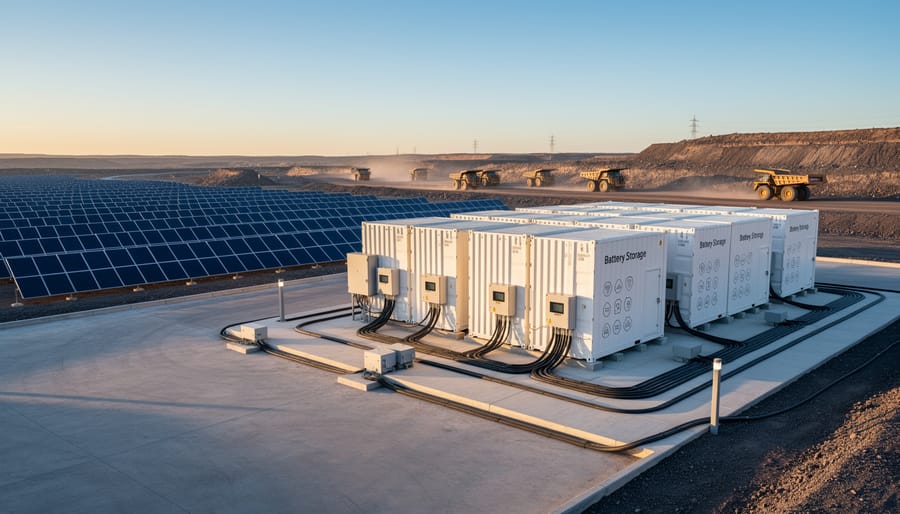
Small and Artisanal Mining
Small-scale and artisanal miners, who operate across Zambia’s copper belt and in gemstone-rich areas, face distinct energy challenges. Many lack grid access entirely and find diesel generators prohibitively expensive to run continuously. Solar energy opens electrification pathways for operations that once depended on manual labour or sporadic generator use.
Portable solar kits, typically 5 to 20 kilowatts, can power essential equipment like water pumps, ventilation fans, grinding mills, and lighting at processing sites. These systems dramatically reduce operating costs compared to diesel, which requires constant fuel transport to remote locations. Battery storage ensures power remains available through the night for security lighting and critical processes.
For artisanal miners, solar electrification increases productivity by enabling mechanized ore processing, improves safety through reliable ventilation and lighting, and reduces environmental impact from diesel spills and emissions. The modular nature of solar allows gradual capacity expansion as mining activities grow, making it financially accessible for smaller operators who cannot afford large upfront capital investments in conventional power infrastructure.
Benefits and Challenges for Zambian Mining Electrification
Solar energy adoption in Zambia’s mining sector presents compelling advantages alongside genuine implementation hurdles that require strategic navigation.
Economic Benefits
Operational cost reduction stands as the most immediate driver. Zambian mining operations currently pay between $0.08 and $0.12 per kilowatt-hour for grid electricity, with diesel generation costing considerably more in remote locations. Solar installations can deliver power at $0.04 to $0.06 per kilowatt-hour over their 25-year lifespan, creating substantial savings for energy-intensive operations. A medium-sized copper processing facility consuming 5 megawatts daily can save over $1 million annually by offsetting 40-50% of conventional power with solar.
Price predictability matters equally. Unlike volatile fuel markets or grid tariffs subject to regulatory changes, solar electricity costs remain stable once installed. This financial certainty simplifies long-term mine planning and improves project economics for investors evaluating Zambian mining ventures.
Environmental and Social Impact
Carbon footprint reduction aligns with growing stakeholder expectations and international financing requirements. A 10-megawatt solar array displaces approximately 15,000 tonnes of carbon dioxide annually compared to diesel generation, helping mining companies meet sustainability commitments and access green financing instruments.
Local employment creation during construction and ongoing maintenance adds social value, particularly in rural mining regions where economic opportunities remain limited.
Operational Advantages
Solar systems require minimal water compared to thermal generation, a critical consideration in water-stressed mining regions. Modular deployment allows phased capacity expansion matching mine development timelines, avoiding the capital intensity of oversized conventional power plants.
Implementation Challenges
Upfront capital represents the primary obstacle. A utility-scale solar installation requires $1 to $1.50 per watt, meaning significant initial investment despite favorable long-term economics. Limited domestic financing options for renewable projects compound this challenge.
Technical expertise gaps pose operational risks. Designing, installing, and maintaining comprehensive solar solutions for mining applications demands specialized skills currently scarce in Zambia’s labor market, though technology transfer through international partnerships addresses this constraint.
Grid infrastructure limitations complicate integration for larger installations. Zambia’s transmission network lacks capacity in some mining regions, restricting how much solar power can be evacuated or requiring expensive grid upgrades.
Intermittency management remains essential. While Zambia enjoys excellent solar irradiation averaging 5.5 kilowatt-hours per square meter daily, mining operations require 24-hour power. Battery storage solutions add 30-40% to project costs, though hybrid configurations with existing diesel or grid power provide more economical reliability.
The European Technology Partnership
European solar technology providers bring proven engineering expertise and comprehensive support frameworks to Zambia’s mining electrification projects. These partnerships extend beyond equipment supply to encompass the entire project lifecycle, from initial feasibility studies and system design through installation oversight and long-term operational support. European manufacturers like INOX Solar have refined their technologies across decades of deployment in diverse climates and applications, offering mining operators battle-tested solutions that withstand the demanding conditions of industrial environments.
The value proposition centers on quality assurance and performance reliability. European solar components typically meet stringent EU manufacturing standards and carry extended warranty periods that matter significantly in remote mining contexts where component failures create costly downtime. Technology transfer happens through training programs that equip local technical teams with installation and maintenance skills, building in-country capacity rather than creating dependency on foreign expertise. This knowledge exchange ensures mining operations can manage routine maintenance and troubleshooting independently while accessing specialist support when needed.
Project management support addresses the practical challenges Zambian mining operators face when implementing solar infrastructure. European providers often facilitate financing arrangements through their networks of development banks and green investment funds familiar with renewable energy projects in African mining contexts. They coordinate logistics for equipment delivery to remote sites, manage customs clearance processes, and oversee installation quality to ensure systems perform to specification from day one.
Long-term service agreements provide ongoing system monitoring, performance optimization, and component replacement planning. These frameworks give mining operators predictable maintenance costs and protect their capital investments through professional asset management. The partnership model emphasizes collaboration rather than simple vendor relationships, aligning European technical capabilities with Zambian mining sector needs to advance sustainable electrification at industrial scale.
Frequently Asked Questions
Solar energy implementation in Zambia’s mining sector raises practical questions among operators evaluating this transition. Understanding these considerations helps mining companies make informed decisions about renewable electrification.
What are the typical initial costs for solar mining installations?
Initial investment varies widely based on system size and configuration, ranging from tens of thousands of dollars for small off-grid systems to several million for large-scale grid-tied arrays. Hybrid systems typically cost less than pure off-grid solutions due to reduced battery requirements.
How quickly do solar systems pay for themselves in mining operations?
Payback periods typically range from three to seven years depending on diesel displacement, electricity rates, and solar resource quality. Operations with high diesel dependency often see faster returns due to significant fuel cost savings.
Can solar panels withstand dusty mining environments?
Modern solar panels perform reliably in dusty conditions when properly maintained. Regular cleaning schedules and protective coatings help maintain efficiency, while robust mounting systems ensure durability in harsh industrial settings.
Is battery storage necessary for mining applications?
Battery requirements depend on system design: off-grid installations require substantial storage for 24-hour operation, hybrid systems need less capacity for load smoothing, and grid-tied systems may operate without batteries entirely.
What financing options exist for mining solar projects?
Financing structures include direct capital investment, power purchase agreements where third parties own the system, and development finance from institutions supporting African renewable energy. Many European suppliers offer equipment financing packages.
How accessible is technical support for remote mining sites?
European technology providers typically offer comprehensive support including remote monitoring, local technical partnerships, and scheduled maintenance visits. Advanced monitoring systems enable proactive issue detection and resolution before production impacts occur.
These considerations matter because mining operations can’t afford energy system failures or extended downtime. The reliability record of well-designed solar installations in similar African mining contexts demonstrates proven performance, though each site requires proper assessment and engineering. Maintenance demands remain relatively low compared to diesel generators, with primary tasks involving cleaning, inverter checks, and battery management where applicable. Scalability represents another advantage: mining companies can start with smaller installations and expand capacity as operations grow or energy demands increase, spreading capital expenditure over time while building operational confidence in solar technology.
Solar energy stands poised to reshape Zambia’s mining landscape by addressing the sector’s most persistent challenge: reliable, affordable power supply. The convergence of the country’s exceptional solar irradiation levels with mining operations that consume massive amounts of electricity creates a natural partnership that goes beyond mere opportunity to become strategic necessity.
Zambia’s mining industry, which anchors the national economy, faces escalating electricity costs and supply constraints that threaten competitiveness. Solar electrification offers a practical path forward, cutting operational expenses while insulating operations from grid instability and fuel price volatility. From large copper extraction facilities reducing grid dependence to artisanal miners accessing electricity for the first time, the technology scales across the entire industry spectrum.
The transition to renewable power in mining represents more than cost savings. It positions Zambia’s mineral exports favorably in global markets increasingly demanding low-carbon production methods, and it demonstrates that energy security and environmental responsibility can advance together rather than compete.
Success depends on sustained collaboration between Zambian mining operators and international technology partners who bring proven systems, rigorous standards, and comprehensive project support. As these partnerships mature, solar electrification will move from pilot projects to industry standard, cementing Zambia’s position as a mining jurisdiction where abundant natural resources, both mineral and solar, power a sustainable economic future.
Leave a Reply