How Solar Energy Slashes Operating Costs for THC Gummy Production

THC gummy manufacturing demands substantial energy—climate-controlled production environments, precision heating systems for infusion processes, industrial-grade refrigeration for storage, and continuous HVAC operation to maintain strict regulatory compliance. These energy-intensive requirements create significant operational costs that directly impact profit margins, particularly as THC gummies for sale face increasing market competition across European markets where cannabis regulations continue evolving.
Solar energy presents a transformative solution specifically engineered for cannabis edibles production facilities. Modern photovoltaic systems deliver consistent, cost-predictable power that aligns perfectly with daytime manufacturing schedules, while advanced battery storage ensures uninterrupted operation during critical production phases. European cannabis businesses implementing solar infrastructure typically achieve 40-60% reductions in electricity expenses within the first operational year—savings that compound substantially over the 25-30 year system lifespan.
Beyond financial advantages, solar integration strengthens market positioning. European consumers increasingly prioritize sustainability, with 73% willing to pay premium prices for environmentally responsible cannabis products. Solar-powered facilities enhance brand credibility, simplify compliance with emerging environmental regulations, and qualify businesses for green energy incentives available across multiple European jurisdictions.
This comprehensive guide examines the intersection of renewable energy and THC gummy production—from calculating your facility’s specific energy requirements to implementing turnkey solar solutions with complete project support. Whether you’re launching a new production facility or retrofitting existing operations, understanding solar’s application to cannabis manufacturing enables strategic decisions that enhance both profitability and sustainability.
Why THC Gummy Manufacturing Demands Massive Energy Resources

The Extraction and Infusion Energy Challenge
THC gummy manufacturing demands substantial and consistent energy throughout the extraction and infusion stages. The initial extraction process typically requires specialized equipment operating at temperatures between 60-180°C, depending on whether manufacturers employ CO2, ethanol, or hydrocarbon-based methods. These systems often run continuously, consuming 15-30 kWh per extraction cycle.
The infusion phase presents equally demanding requirements. Precision heating elements must maintain cannabinoid activation temperatures—typically 105-120°C for decarboxylation—without degradation. Industrial kettles and mixers used during infusion frequently draw 20-50 kW during active production cycles, with temperature fluctuations of even 5°C potentially compromising product quality and potency.
European manufacturers face additional pressure as energy costs continue rising, with industrial electricity rates varying significantly across member states. This energy intensity creates both a financial burden and sustainability challenge. Solar energy offers an innovative solution by offsetting peak daytime production loads precisely when extraction and infusion activities occur. Modern photovoltaic systems can reliably power these temperature-critical processes while reducing operational costs by 40-60%, simultaneously addressing efficiency and environmental responsibility—increasingly important factors for cannabis businesses seeking market differentiation in Europe’s evolving regulatory landscape.
Climate Control and Storage Requirements
THC gummies demand rigorous climate control throughout their lifecycle—from production through packaging and storage. These products typically require temperatures between 15-20°C with humidity levels maintained at 40-60% to prevent melting, degradation of active compounds, and microbial growth. Any deviation compromises product stability, potency, and shelf life, making consistent environmental control non-negotiable for compliance with pharmaceutical-grade manufacturing standards.
Storage facilities operate 24/7 cooling systems to preserve finished inventory, representing one of the largest continuous energy drains in cannabis manufacturing. European manufacturers face particularly high costs given regional electricity prices and increasingly stringent quality regulations. A medium-sized facility storing several thousand units monthly can consume 30-40% of total operational energy purely on climate control and cold storage.
Solar installations directly offset these predictable, constant energy demands with clean power generation. The continuous nature of cooling requirements aligns perfectly with battery-integrated solar systems, which store daytime generation for overnight climate control needs. This combination delivers substantial operational savings whilst reducing carbon footprints—an increasingly important factor as European cannabis markets mature and sustainability becomes a competitive differentiator. Efficient energy management through renewable sources transforms climate control from a cost burden into an innovation opportunity.
Solar Power as a Game-Changer for Cannabis Manufacturers
Matching Solar Generation to Production Schedules
THC gummy manufacturing naturally aligns with solar energy generation patterns, creating an ideal opportunity for operational efficiency and sustainability. Production facilities typically operate during standard business hours—precisely when solar panels deliver peak output. This synchronization enables manufacturers to maximize self-consumption of generated electricity, directly powering energy-intensive processes like mixing, depositing, cooling, and packaging equipment.
European cannabis producers can strategically schedule their most power-demanding operations—particularly temperature-controlled curing rooms and HVAC systems—during midday peak solar hours. This approach minimizes grid reliance and optimizes return on solar investment. By consuming electricity as it’s generated, manufacturers avoid export tariffs and maximize financial benefits.
Smart energy management systems further enhance this alignment, automatically prioritizing solar power for critical production equipment. During optimal generation periods, facilities can run batch processes, charge thermal storage systems, or operate auxiliary equipment that provides operational flexibility.
This natural fit between production schedules and solar generation represents a significant competitive advantage for forward-thinking manufacturers. The resulting reduction in grid dependence not only cuts operational costs but also insulates businesses from volatile energy prices—a crucial consideration in Europe’s evolving energy landscape. For manufacturers committed to sustainability credentials, demonstrating genuine renewable energy integration strengthens brand positioning in increasingly environmentally conscious markets.
Battery Storage for Round-the-Clock Operations
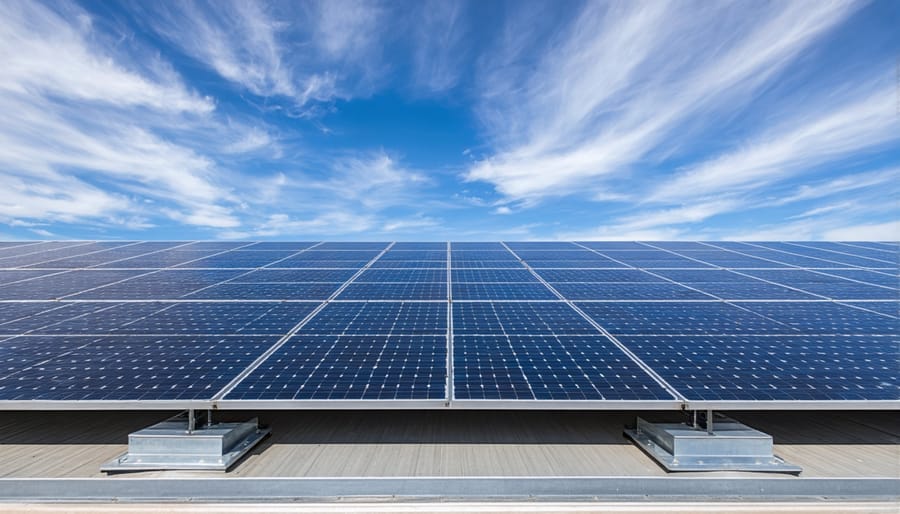
THC gummy manufacturing demands consistent energy around the clock—climate-controlled production rooms don’t pause when the sun sets, and critical refrigeration systems require uninterrupted power. Integrated battery systems bridge this gap by storing excess solar energy generated during peak daylight hours for use during evening and overnight operations.
Modern battery storage capacity has evolved significantly, with lithium-ion systems now offering sufficient reserves to power temperature-sensitive processes throughout the night. For gummy manufacturers, this means maintaining precise humidity levels in drying rooms, sustaining refrigeration for gelatin-based products, and running packaging equipment during night shifts—all powered by stored solar energy.
The flexibility extends beyond basic backup functionality. Battery systems enable manufacturers to strategically time energy-intensive processes, such as running industrial mixers or cooling systems when stored energy is abundant rather than drawing from expensive grid power during peak tariff periods. This operational flexibility translates directly to reduced energy costs while maintaining production schedules.
European manufacturers benefit particularly from this innovation, as battery technology continues advancing with stronger EU sustainability incentives. The storage capacity required varies based on your facility’s specific energy profile, but typically ranges from covering 6-12 hours of essential operations. Combined with solar arrays, these systems create genuine energy independence, insulating your production from grid instability and volatile energy prices while demonstrating commitment to sustainable manufacturing practices that increasingly matter to distributors and consumers alike.
Financial Benefits: From Energy Expense to Competitive Advantage
Calculating Your Solar ROI in Cannabis Production
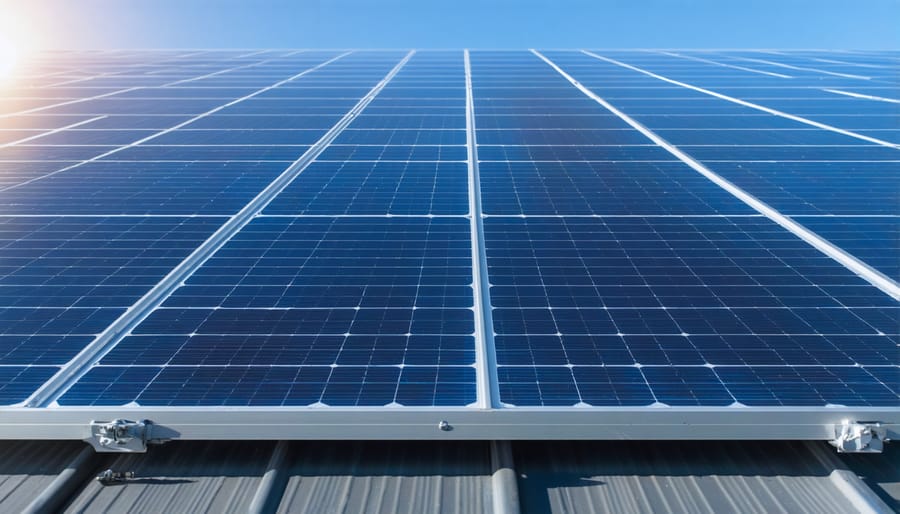
Understanding your solar investment returns requires examining your facility’s unique energy profile. THC gummy manufacturers typically consume between 150-400 kWh per square meter annually, with concentrated demand during processing and climate control operations. European electricity rates, ranging from €0.15 to €0.35 per kWh depending on location, significantly impact your baseline calculations.
Start by analyzing your monthly consumption patterns. Peak demand periods—often during extraction, mixing, and temperature-controlled curing—reveal optimal solar sizing opportunities. A mid-sized 2,000 square meter facility consuming 600,000 kWh annually could install a 400-500 kWp system, generating substantial savings whilst supporting sustainability goals.
The framework for calculating solar ROI in cannabis production considers several variables: installation costs (currently €800-1,200 per kWp in Europe), available incentives, energy offset percentages, and feed-in tariff rates where applicable. Most European cannabis manufacturers achieve payback periods between 6-10 years, with systems delivering 25+ years of reliable performance.
Consider that production facilities benefit from daytime solar generation aligning with manufacturing schedules. Battery storage integration, whilst increasing initial investment, maximizes self-consumption and provides backup power for critical temperature-sensitive processes. Regional factors—including solar irradiance levels, local subsidies, and grid connection policies—further influence your specific returns. Professional energy audits ensure accurate projections tailored to your operation’s efficiency requirements and expansion plans.
Incentives and Support for European Cannabis Facilities
European cannabis manufacturers transitioning to solar energy can access substantial financial support through various sustainability initiatives and green financing programmes. The European Union’s Innovation Fund offers grants specifically for renewable energy projects in industrial settings, with cannabis facilities eligible to receive funding covering up to 60% of capital expenditure for solar installations. Additionally, the EU Taxonomy Regulation has opened doors to preferential green financing rates, making solar investments increasingly attractive for cannabis producers focused on sustainability.
Many European nations provide targeted tax incentives for businesses adopting renewable energy solutions. Germany’s KfW programmes offer low-interest loans and repayment bonuses for commercial solar projects, whilst France’s tax credit system allows cannabis manufacturers to deduct significant portions of their solar investment from corporate tax obligations. The Netherlands and Spain have introduced accelerated depreciation schemes specifically designed to encourage industrial solar adoption, directly reducing the payback period for cannabis facilities investing in photovoltaic systems.
Beyond financial incentives, several European countries now classify cannabis manufacturers with renewable energy systems as priority candidates for expedited licensing and regulatory approvals. Portugal and Italy have streamlined permitting processes for cannabis facilities demonstrating commitment to sustainability through solar integration. Regional development banks across Europe also offer specialized financing packages combining equipment loans with installation support, ensuring comprehensive project implementation from design through commissioning. These combined incentives substantially improve the return on investment for solar-powered THC gummy production, making renewable energy transition both financially viable and strategically advantageous for forward-thinking cannabis manufacturers prioritizing efficiency and environmental responsibility.
Sustainability Credentials That Resonate With Modern Consumers
Today’s cannabis consumers increasingly prioritize sustainability when making purchase decisions, creating significant opportunities for manufacturers who embrace renewable energy solutions. Research consistently demonstrates that eco-conscious positioning resonates particularly strongly within the cannabis market, where consumers already demonstrate elevated environmental awareness compared to traditional consumer segments.
Solar-powered THC gummy production provides tangible sustainability credentials that translate directly into competitive advantages. Manufacturers can authentically market their products as “solar-crafted” or “renewable energy-produced,” differentiating themselves in an increasingly crowded marketplace. This positioning appeals to the 73% of cannabis consumers who report willingness to pay premium prices for sustainably-produced products, according to recent industry surveys.
The European market particularly values transparency regarding environmental impact. By integrating sustainable manufacturing practices through solar implementation, manufacturers can quantify their carbon reduction achievements—providing specific metrics like “reducing CO2 emissions by X tonnes annually” that resonate with data-driven consumers. These measurable sustainability outcomes strengthen brand narratives and support premium positioning strategies.
Beyond consumer appeal, solar adoption enhances relationships with increasingly sustainability-focused retailers and distributors. Many European cannabis retailers now implement supplier sustainability scorecards, prioritizing partnerships with manufacturers demonstrating genuine environmental commitment. Solar-powered facilities score exceptionally well across these evaluation frameworks.
The competitive differentiation extends to regulatory advantages as well. Several European jurisdictions offer preferential licensing considerations or expedited permitting for cannabis operations demonstrating robust sustainability commitments. Solar integration signals serious environmental responsibility, potentially smoothing regulatory pathways while simultaneously reducing operational costs—creating compounding business advantages that forward-thinking manufacturers cannot afford to overlook.
Navigating Compliance and Integration Challenges
Working Within European Cannabis Regulations
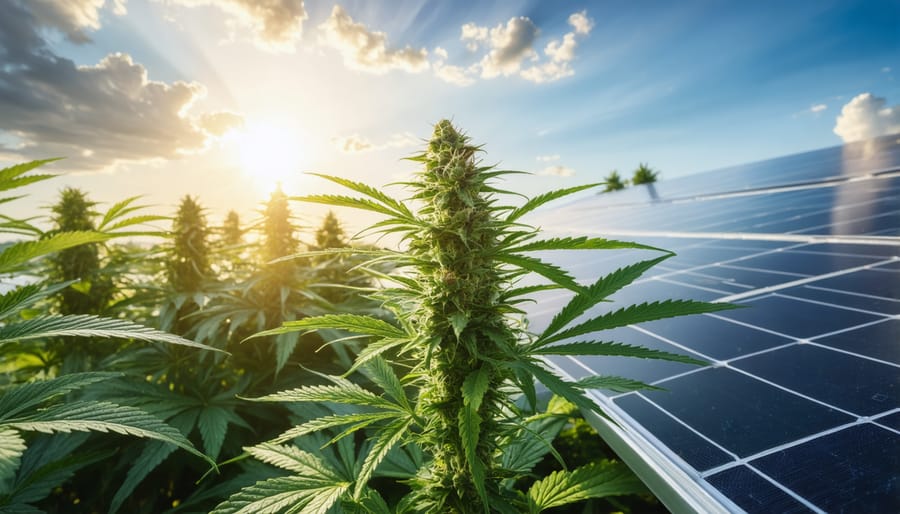
Cannabis facilities integrating solar infrastructure must navigate a complex regulatory landscape that extends beyond standard renewable energy permits. In Europe, cannabis manufacturing remains heavily regulated, requiring specific documentation when modifying facility energy systems. Before installation, operators should verify that renewable energy additions comply with national cannabis licensing requirements, as some jurisdictions mandate pre-approval for any facility modifications.
Permit applications typically require detailed electrical diagrams showing solar integration points, structural assessments for rooftop installations, and grid connection approvals. Cannabis facilities must maintain strict separation between renewable energy documentation and product-related compliance records, though energy source transparency increasingly benefits sustainability audits.
Working with experienced solar providers ensures that all installation work meets both renewable energy standards and cannabis-specific facility requirements. Proper documentation of your solar system’s efficiency and sustainability credentials can strengthen licence renewal applications and demonstrate corporate responsibility. Many European cannabis operators find that comprehensive project support—from initial regulatory assessment through final grid connection—streamlines the approval process significantly, allowing them to focus on production while their solar partner handles the technical compliance requirements inherent in this innovative intersection of renewable energy and regulated manufacturing.
System Sizing and Technical Requirements
Determining the right solar capacity for your THC gummy manufacturing facility requires careful assessment of your energy consumption patterns. Start by analyzing your annual electricity usage, paying particular attention to peak demand during production hours when climate control, decarboxylation ovens, and mixing equipment operate simultaneously. A professional energy audit will identify your baseline consumption and growth projections.
Roof structural integrity is paramount—solar installations typically add 15-20 kg per square meter. Engage a qualified structural engineer to evaluate load-bearing capacity, especially for older industrial buildings. Consider roof orientation, shading analysis, and available surface area. South-facing installations in Europe deliver optimal performance, though east-west configurations can extend generation periods to better match production schedules.
Electrical integration demands coordination between your solar system and existing infrastructure. Assess your main distribution board capacity, three-phase power requirements for heavy machinery, and whether battery storage enhances operational efficiency during peak tariff periods. Modern inverters enable seamless grid connection while maintaining power quality for sensitive cannabis processing equipment.
Comprehensive project support ensures these technical considerations align with your sustainability goals and regulatory compliance requirements, delivering a robust renewable energy solution tailored to cannabis manufacturing demands.
Comprehensive Project Support for Cannabis Manufacturers
Transitioning to solar energy represents a significant investment for cannabis manufacturers, which is why INOX Solar provides comprehensive project support tailored specifically to the unique demands of THC gummy production facilities. Our end-to-end approach ensures seamless integration of renewable energy systems into your manufacturing environment, maximizing efficiency while minimizing operational disruption.
The journey begins with detailed energy audits conducted by our specialist team, who analyze your facility’s consumption patterns, production schedules, and equipment specifications. We examine peak demand periods during mixing, heating, and climate control operations to design systems that align perfectly with your manufacturing rhythms. This thorough assessment identifies optimization opportunities that generic solar providers often overlook.
Our custom system design phase translates audit findings into tailored solar solutions. We consider factors like roof structural capacity, production expansion plans, and integration with existing electrical infrastructure. For facilities requiring consistent power delivery, we incorporate commercial solar battery storage to ensure uninterrupted operations during cloudy periods or nighttime production runs—critical for maintaining precise temperature control in gummy manufacturing.
Professional installation follows European standards and cannabis industry regulations, with minimal interference to your production schedule. Our technicians understand the sensitivity of controlled manufacturing environments and coordinate installation phases to protect product quality and operational continuity.
Post-installation, INOX Solar provides comprehensive monitoring systems that track energy generation, consumption patterns, and system performance in real-time. This ongoing oversight enables proactive maintenance, ensuring your solar investment delivers optimal returns throughout its operational lifetime. Our dedicated support team remains available for technical assistance, system upgrades, and efficiency consultations as your manufacturing operations evolve.
This holistic approach transforms solar adoption from a complex technical challenge into a streamlined sustainability enhancement for your cannabis manufacturing business.
Solar energy represents far more than an environmental statement for THC gummy manufacturers—it’s a strategic investment delivering measurable returns through reduced operational costs, enhanced energy independence, and compelling market differentiation. As production scales and energy expenses continue rising across Europe, facilities powered by renewable sources gain significant competitive advantages while insulating themselves from volatile utility pricing and grid disruptions.
The combination of energy-intensive manufacturing processes and abundant rooftop or ground-mount installation opportunities makes cannabis production facilities ideal candidates for solar integration. With financial incentives, accelerated payback periods, and sustainability credentials increasingly valued by consumers and investors alike, the case for transitioning to solar has never been stronger.
Whether you’re operating an established production facility or planning expansion, now is the optimal time to evaluate your renewable energy potential. A comprehensive energy assessment reveals your specific consumption patterns, identifies ideal system configurations, and projects accurate financial returns tailored to your operations. Taking this first step toward energy independence positions your business for long-term resilience, profitability, and leadership in an increasingly sustainability-focused market. Contact our team today to discover how solar innovation can transform your THC gummy manufacturing operations.
Leave a Reply