How Energy Trading Platforms Turn Your Solar Panels Into a Revenue Stream
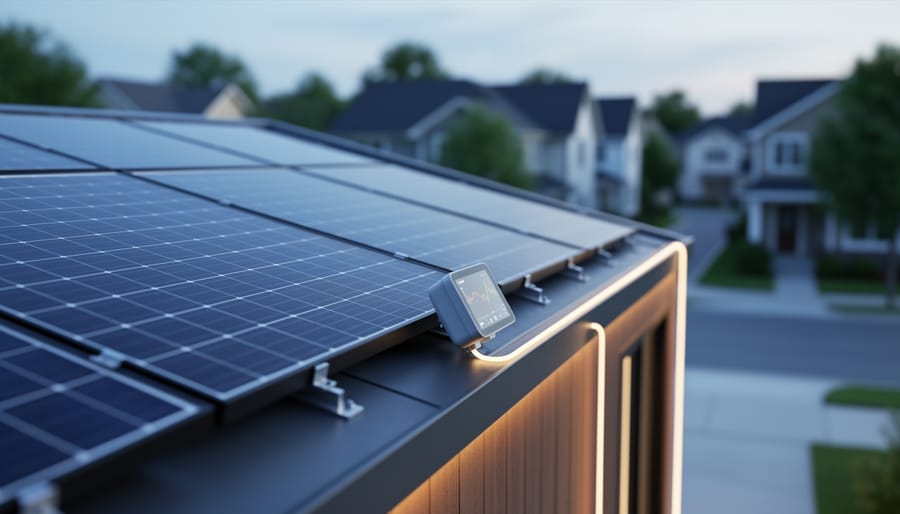
The solar panels on your roof are generating more electricity than you can use, and until recently, that surplus simply flowed back to the grid for minimal compensation. Energy trading platforms are changing this dynamic across Europe, allowing prosumers to sell excess solar generation directly to neighbors, businesses, or other consumers through peer-to-peer marketplaces that operate much like stock exchanges for electricity.
These digital platforms represent a fundamental shift in how we think about energy ownership and distribution. Rather than being passive recipients of utility-provided power, homeowners and businesses with distributed solar installations can now participate actively in local energy markets, setting their own prices and choosing their buyers. The technology combines blockchain verification, smart metering, and automated trading algorithms to facilitate transactions that happen in real-time, responding to supply and demand within your local network.
The appeal goes beyond simple financial returns. Energy trading platforms create resilient microgrids that reduce transmission losses, support grid stability during peak demand, and keep energy value within local communities. For a homeowner in Bavaria or a commercial facility in the Netherlands, this means your solar investment serves multiple purposes: reducing your own electricity costs, generating revenue from surplus production, and contributing to regional energy independence.
The regulatory landscape in 2026 has matured significantly to support these platforms. European directives now recognize energy communities and peer-to-peer trading as legitimate market activities, with simplified licensing requirements and standardized grid access protocols. Member states have implemented frameworks that balance consumer protection with innovation, though specific rules around pricing, metering requirements, and platform certification still vary by country. Understanding these requirements before selecting a platform determines whether your participation will be straightforward or administratively complex.
What Makes Energy Trading Platforms Different from Traditional Grid Models
The conventional energy grid operates on a fundamentally top-down model: large power plants generate electricity, high-voltage transmission lines carry it hundreds of kilometres, and distribution networks deliver it to your home or business. You consume, the utility bills you at rates set by regulators or long-term contracts, and the transaction ends there. This centralized system made sense when energy generation required massive infrastructure investment, but it wasn’t designed for a world where solar panels on your roof can generate surplus power on a sunny afternoon.
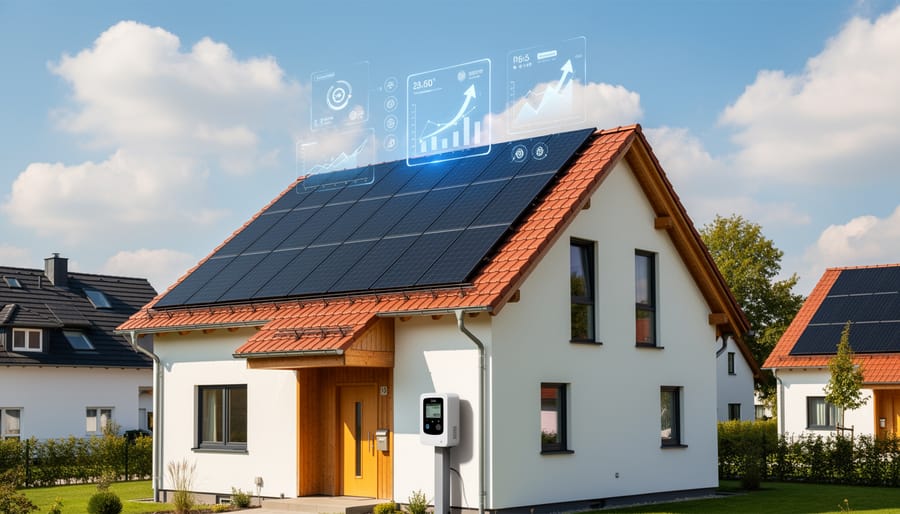
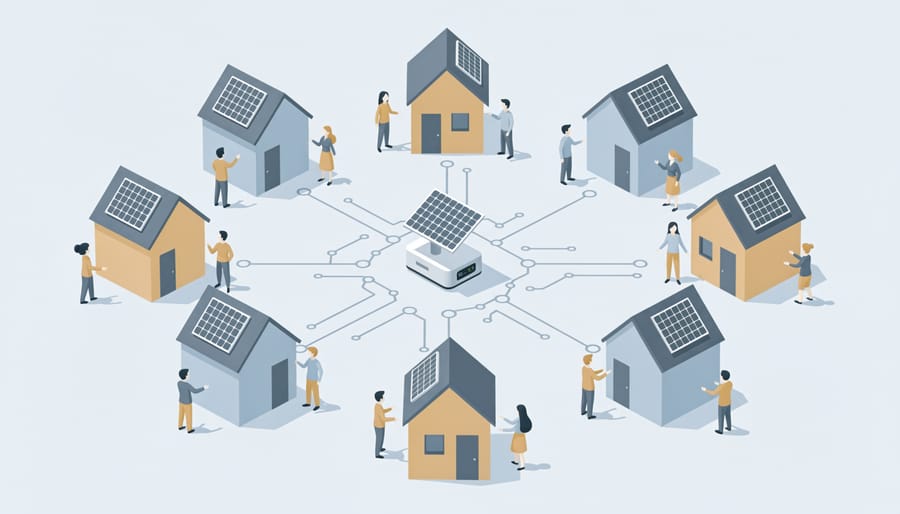
Energy trading platforms flip this model. Instead of a one-way flow from distant power stations to passive consumers, they enable bidirectional transactions where anyone with solar panels becomes both a producer and a consumer, a prosumer. When your system generates more electricity than you need, the surplus doesn’t just feed back into the grid for a standard feed-in tariff. Through the platform, you can sell it directly to your neighbour, a nearby business, or another participant in your local energy community, all without traditional utility middlemen setting the price or controlling the transaction.
| Dimension | Traditional Grid Model | Energy Trading Platform Model |
|---|---|---|
| Energy Flow | One-way from central plants to consumers | Bidirectional between prosumers in local networks |
| Pricing Control | Set by utilities and regulators | Dynamic, market-driven by participants |
| Grid Resilience | Vulnerable to single points of failure | Distributed resources increase redundancy |
| Consumer Role | Passive recipients of electricity | Active participants managing supply and demand |
This shift mirrors the broader transition to renewable microgrids where localized energy generation and consumption reduce dependence on centralized infrastructure. The key difference lies in market participation. Traditional grids treat your solar panels as a minor adjustment to their supply calculations, offering minimal compensation for exports. Trading platforms recognize you as an active market participant with agency over when, how much, and at what price you sell your energy.
The technology enabling this transformation includes smart meters that track generation and consumption in real-time, automated matching systems that pair sellers with buyers, and settlement mechanisms that handle payments, often within the same billing cycle. Where the old grid operated on monthly estimates and standardized rates, platforms work with 15-minute intervals and prices that reflect actual local supply and demand at that moment.
How Peer-to-Peer Energy Trading Works in Distributed Solar Networks
The Technology Stack Behind the Platform
At the heart of every energy trading platform sits a sophisticated suite of interconnected technologies working in concert to track, verify, and settle energy transactions between solar owners.
Smart meters form the foundation, measuring energy production and consumption in real time with granular data sent to the platform every few seconds. These devices communicate bidirectionally with your solar installation and the trading network, capturing exactly when your panels generate surplus power and when you draw from the grid. Modern smart inverters do more than convert DC to AC; they actively manage power quality, respond to grid signals, and integrate with the platform’s control systems to optimize when and how much energy enters the market.
The platform’s digital infrastructure typically runs on either distributed ledger technology or centralized database systems. Blockchain for peer-to-peer energy trading offers transparency and immutability, creating tamper-proof records of every transaction without requiring a central authority. However, many European platforms in 2026 use hybrid models or optimized centralized ledgers for speed and lower computational costs, particularly where regulatory frameworks already provide transaction oversight.
Application programming interfaces (APIs) bind everything together, connecting your solar system’s data streams with the trading algorithms, grid operators, and settlement mechanisms. An energy management system orchestrates these components, learning your consumption patterns and optimizing when to trade, store in batteries, or consume locally based on real-time pricing and your preferences.
Price Discovery and Market Mechanisms
Understanding how prices work on energy trading platforms is crucial for maximizing your solar investment returns. Unlike the fixed retail rates charged by traditional utilities, these platforms employ sophisticated mechanisms that reflect real-time supply and demand.
Most European platforms in 2026 use dynamic pricing algorithms that adjust rates every 15 to 30 minutes based on local generation and consumption patterns. When solar production peaks at midday and demand is low, prices drop, sometimes to near zero. During evening hours when panels aren’t producing but demand spikes, prices climb significantly. This creates natural incentives for battery storage owners to charge when prices are low and discharge when they’re high.
Auction-based models let sellers set reserve prices for their excess energy while buyers bid in real time. The platform matches transactions at the clearing price where supply meets demand. This transparent process ensures fair market value, though it requires more active participation than set-and-forget approaches.
Some platforms offer fixed-rate contracts where prosumers lock in selling prices for specific periods, providing revenue predictability at the cost of potentially missing peak pricing opportunities. These work well for commercial operations with predictable generation patterns.
Time-of-use considerations add another layer. Weekend pricing typically differs from weekday rates, and seasonal variations affect both generation capacity and demand curves. Platforms display historical price data and forecasts to help participants optimize their trading strategies.
Local pricing within micro-grids often beats grid export rates by 15 to 30 percent because the energy avoids transmission losses and network charges. This premium rewards participants for strengthening local energy resilience while reducing strain on the broader distribution system.
Benefits for European Residential and Commercial Solar Owners
Energy trading platforms unlock tangible value for European solar owners, transforming rooftop arrays from simple utility bill reducers into active income generators. The advantages extend beyond basic feed-in tariffs, creating opportunities that align financial returns with sustainability goals.
**Financial Returns Beyond Standard Feed-In Tariffs**
Traditional feed-in arrangements typically pay wholesale rates for exported solar power, often 30-50% less than retail electricity prices. Energy trading platforms flip this equation by enabling direct sales to neighbors, local businesses, or community members at negotiated rates. German residential prosumers participating in peer-to-peer networks report earning 15-25% more per kilowatt-hour compared to standard grid export rates. For a 10 kW residential system generating 8,000 kWh annually with 40% export, this translates to an additional €200-400 per year. Commercial installations with larger export volumes see proportionally greater gains, and the economics improve further when combined with battery storage that enables strategic selling during peak demand periods.
The revenue model becomes particularly attractive during winter months when production drops but local demand spikes. Rather than exporting surplus summer generation at rock-bottom prices, solar owners can store excess energy and release it when platform rates rise, capturing 2-3 times the base compensation rate during high-demand windows.
**Comprehensive Value Proposition**
Beyond direct financial returns, participation delivers multiple interconnected benefits:
- Grid independence: reduced reliance on utility imports during price spikes or supply constraints
- Portfolio diversification: energy sales create a hedge against rising electricity costs
- Community resilience: localized energy networks maintain power flow during grid disturbances
- Transmission efficiency: eliminating long-distance power transport cuts losses by 8-12%
- Environmental impact: maximizing local renewable use displaces fossil generation at the margin
- Market access: small-scale producers gain commercial opportunities previously limited to utilities
- Energy autonomy: direct control over when, where, and at what price to sell surplus generation
These advantages compound over time. A commercial bakery in the Netherlands using platform trading reduced annual energy costs by 22% while simultaneously earning €3,800 from rooftop solar exports, a dual benefit impossible under conventional arrangements.
For businesses, participation strengthens sustainability credentials with measurable proof points. Corporate buyers increasingly value verifiable renewable energy sourcing from identifiable local producers rather than generic renewable energy certificates. Trading platforms provide the transaction records and verification infrastructure that support ESG reporting and carbon accounting requirements under European disclosure standards.
The community dimension matters too. Residential participants report increased awareness of energy consumption patterns, leading to behavioral changes that reduce overall demand by 8-15%. When neighbors see real-time pricing signals and understand their solar contribution to local supply, collective grid stress decreases during peak hours, benefiting all participants through lower average costs and improved network stability.
Real-World Applications Across Europe in 2026
Across Europe, energy trading platforms have moved from pilot schemes to operational reality, with thousands of solar owners now actively trading excess generation with their neighbors and local communities.
Germany leads the market with over 50 active local energy communities using platforms like Sonnen Community and StromDAO. In Baden-Württemberg, a residential neighborhood in Freiburg connects 180 households through a shared platform where excess solar power trades at rates 15-20% above standard feed-in tariffs. The community collectively generates 450 MWh annually, with 60% consumed locally rather than exported to the grid. Participants report average additional revenue of €240 per household annually compared to traditional grid export.
The Netherlands has embraced the industrial park model particularly effectively. The Port of Rotterdam operates a platform connecting 23 companies with rooftop solar installations, enabling energy sharing across warehouses, cold storage facilities, and logistics centers. The system handles peak demand mismatches, when one facility’s solar production exceeds its needs, neighboring businesses purchase directly rather than drawing from the grid. This arrangement has reduced collective grid dependence by 35% and cut energy costs by €1.8 million annually across participating companies.
Belgium’s Flemish region pioneered the cooperative approach through platforms like Energent, which now serves 47 community energy cooperatives. A notable example in Ghent involves 320 residents who collectively own and operate a distributed solar network totaling 1.2 MW capacity. Members without suitable roofs purchase shares in communal installations on local schools and municipal buildings, then receive credits for their portion of generation through the trading platform.
Spain’s regulatory reforms in 2024 unlocked rapid growth in Mediterranean regions. Valencia hosts several apartment building consortiums where shared rooftop arrays feed individual units through internal microgrids and trading platforms. One 48-unit complex generates 85 MWh annually, with surplus production traded among residents based on real-time consumption patterns. The platform automatically routes excess power to units running air conditioning during peak summer hours, maximizing local consumption and reducing grid strain.
These examples demonstrate that energy trading platforms work across diverse settings, from single-family neighborhoods to industrial zones, creating tangible economic and environmental benefits for participants throughout Europe.
Requirements for Participating in Energy Trading Platforms
Entering the world of peer-to-peer energy trading requires more than just a rooftop installation, your solar system must meet specific technical and administrative requirements before you can start monetizing excess generation. The barrier to entry has lowered significantly in 2026, but understanding these prerequisites helps you plan effectively.
Your hardware forms the foundation of trading participation. Most platforms require a smart meter or bi-directional meter capable of recording both energy consumption and generation in 15-minute intervals. These devices communicate directly with the trading platform to track your production and consumption patterns in real time. Your solar inverter must also support remote monitoring and potentially automated dispatch commands, newer models typically include these features as standard, while older installations may need upgrades. Battery storage isn’t strictly mandatory on all platforms, but BESS storage dramatically improves your trading flexibility by allowing you to shift generation to higher-price periods rather than selling excess production immediately at potentially lower rates.
- Prosumer
- An energy user who both produces and consumes electricity, typically through rooftop solar installations. Prosumers form the core participant base in peer-to-peer energy trading networks.
- Smart Meter
- A digital electricity meter that records consumption and generation data at regular intervals and transmits this information to utilities and trading platforms. These devices enable the real-time tracking essential for dynamic energy trading.
- Bi-directional Meter
- A specialized meter that measures electricity flow in both directions, from the grid to your property and from your solar system back to the grid. This dual measurement capability is crucial for accurately calculating your net energy position.
- Grid Interconnection Agreement
- A formal contract between you and your local distribution network operator that governs the terms under which your solar system connects to the grid. This agreement typically must be updated or supplemented to allow peer-to-peer trading activities.
Platform registration involves submitting documentation about your installation, including capacity certificates, grid connection details, and proof of insurance. Most European platforms accept systems from 3 kW upward, though commercial installations of 10 kW or larger often access better trading conditions and lower transaction fees.
Navigating European Regulations and Grid Connection Rules
The regulatory landscape for peer-to-peer energy trading in Europe has evolved significantly by 2026, with the EU Clean Energy Package establishing the legal foundation for citizens and businesses to become active energy market participants. Article 21 grants all EU citizens the right to self-consume, store, and sell renewable electricity without prohibitive charges or administrative barriers. This framework has opened the door for energy trading platforms across member states, though implementation varies considerably by country.
Germany’s revised Energy Industry Act now permits direct peer-to-peer transactions without full utility licensing, provided platforms register as “citizen energy communities” and meet transparency requirements. The Netherlands operates a similar system with its “energy cooperatives” model, which allows residential prosumers to trade within designated geographical zones. Spain introduced simplified registration procedures for micro-traders selling under 100 MWh annually, while Belgium’s Flanders region has integrated platform trading into its digital energy certificates system.
Net metering remains the dominant compensation model in most markets, but it’s increasingly complemented rather than replaced by P2P trading. Many countries now offer hybrid approaches where solar owners can claim net metering credits for utility sales while simultaneously trading excess generation through platforms during peak demand periods. This flexibility supports comprehensive sustainable energy management strategies.
Grid connection rules have standardized around EN 50549 and related technical standards, requiring all trading-enabled installations to maintain bidirectional metering and comply with grid code requirements. Most distribution system operators now provide streamlined approval processes for platform-connected systems, though connection fees and ongoing grid access charges vary by region. France’s recent “right to inject” legislation has eliminated discriminatory charges previously applied to small-scale traders.
Looking ahead, the European Commission’s 2027 proposals suggest mandatory interoperability standards for trading platforms and harmonized settlement periods, which should reduce fragmentation and expand market access for European prosumers.
Challenges and Considerations Before You Start Trading
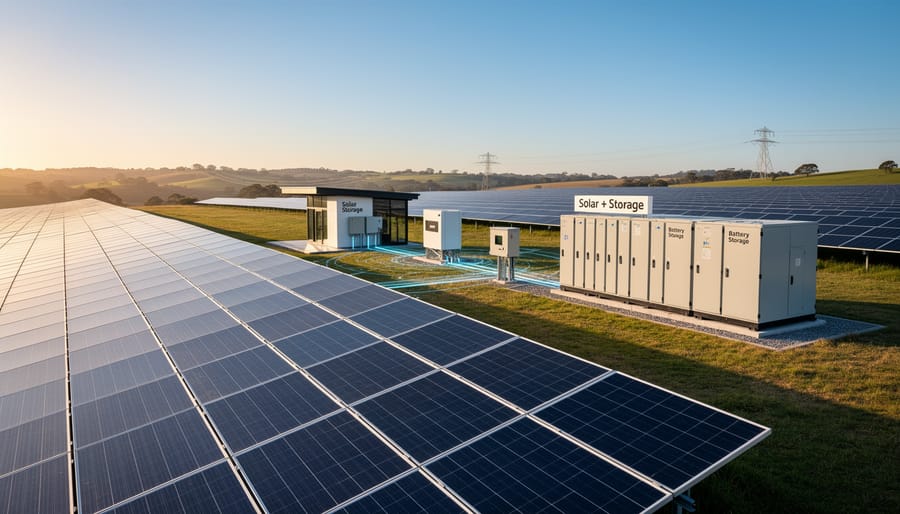
Participating in energy trading platforms offers compelling financial and environmental benefits, but European solar owners should enter with realistic expectations. Platform fees typically range from 5-15% of transaction value, eating into the margins that make peer-to-peer trading attractive in the first place. Transaction costs add another layer, the administrative overhead of matching buyers and sellers, processing payments, and managing settlements can reduce net returns by an additional 2-8%, depending on your trading volume and platform choice.
- Generate additional revenue from excess solar production beyond standard feed-in tariffs
- Contribute directly to local energy resilience and reduce transmission losses
- Gain real-time control over pricing and who receives your energy
- Support community-level decarbonization and renewable energy adoption
- Platform and transaction fees can consume 7-23% of gross trading revenue
- Technical setup requires smart meters, compatible inverters, and often battery storage
- Market liquidity varies significantly by region and time of day
- Regulatory compliance and insurance requirements add complexity and cost
Technical complexity presents another barrier. Integrating your solar-powered smart home with a trading platform demands compatible hardware, not all existing solar installations can participate without upgrading inverters or adding communication modules. Grid compatibility issues crop up frequently, particularly in older distribution networks not designed for bidirectional power flow. Your distribution system operator may impose connection restrictions or require costly grid reinforcement studies before approving trading participation.
Market liquidity remains inconsistent across Europe in 2026. Rural areas with fewer prosumers struggle to maintain active markets, leading to extended periods where you cannot sell excess generation at attractive prices. Insurance requirements vary by platform and jurisdiction, some demand liability coverage for grid disruptions or equipment failures, adding €200-500 annually to operational costs. Weather-dependent generation creates revenue volatility that complicates financial planning, especially without battery storage to shift production to high-demand periods.
How INOX Solar Supports Your Energy Trading Journey
INOX Solar positions itself as more than a solar installation provider, we’re your strategic partner in maximizing the financial potential of your distributed energy system. Our approach to energy trading preparation begins during the initial system design phase, where we assess your consumption patterns, roof capacity, and trading objectives to configure a platform-ready installation from day one.
We exclusively specify inverters and smart meters that meet the technical requirements of major European energy trading platforms. Our equipment partnerships with manufacturers like SMA, Fronius, and Huawei ensure native compatibility with blockchain-enabled systems and real-time data transmission protocols. This eliminates the costly retrofitting that many solar owners face when joining trading platforms after installation.
Battery integration represents a critical component for serious energy traders. We design hybrid systems that balance self-consumption with strategic grid export, incorporating storage solutions sized to your trading strategy rather than generic capacity recommendations. Our engineers model different trading scenarios during the planning stage, showing you projected returns under various market conditions and helping you choose the optimal battery-to-panel ratio for your specific situation.
Beyond hardware, our project management extends to platform onboarding support. We’ve established working relationships with several European P2P trading platforms and can guide you through registration processes, technical verification, and initial setup. Our technical team provides consultation on optimizing your system settings for automated trading, configuring export thresholds, setting minimum acceptable prices, and programming time-based trading rules that align with your local market dynamics.
For commercial and industrial clients, we offer ongoing performance monitoring and trading optimization services, ensuring your system continues delivering competitive returns as platform algorithms and market conditions evolve.
Energy trading platforms represent more than just a new revenue opportunity, they fundamentally reshape how we think about energy ownership and community resilience. In 2026, what began as scattered pilot projects has matured into a viable pathway for European solar owners to maximize their investment while accelerating the continent’s transition to distributed renewable energy.
The technology works. The regulatory framework, while still evolving, increasingly supports peer-to-peer transactions across EU member states. Early adopters in Germany, the Netherlands, and Belgium have demonstrated that residential and commercial solar owners can generate meaningful additional income while strengthening local energy security.
Yet success requires preparation. You’ll need compatible equipment, realistic expectations about returns, and patience as platforms scale and regulatory clarity improves. The most successful participants approach energy trading as part of a broader energy strategy, one that includes optimized system design, battery storage for flexibility, and professional support during installation and integration.
If you’re considering solar or already own a system, now is the time to position yourself for this shift. Choose equipment designed for smart grid integration. Work with partners who understand platform requirements and can configure your system accordingly. Start with platforms active in your region, even if initial returns seem modest.
The energy grid you participate in tomorrow looks dramatically different from yesterday’s one-way utility model. Energy trading platforms put that transformation within reach today.
Leave a Reply