How Advanced Coatings Keep Your Solar Panels Working Through Europe’s Harshest Weather
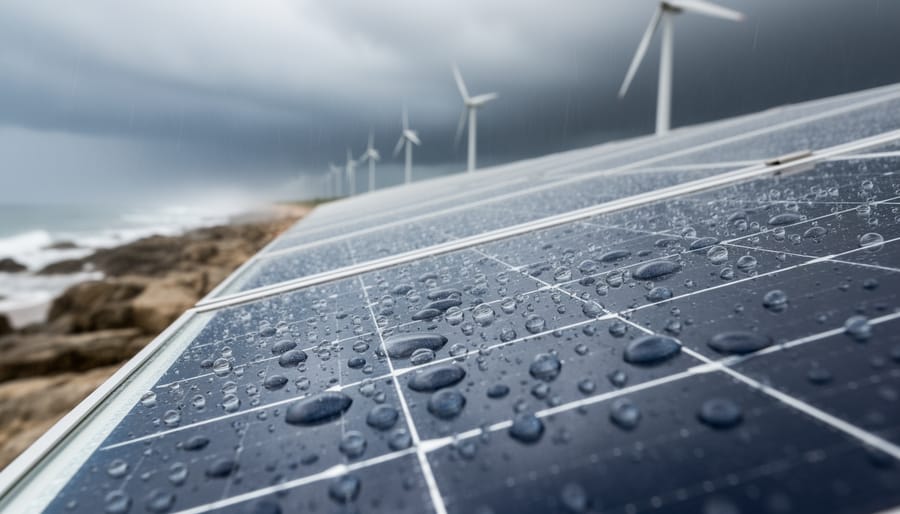
Solar panels face relentless assault from their environment. Rain, wind, UV radiation, salt spray, dust, and temperature fluctuations work continuously to degrade photovoltaic surfaces, reducing energy output by up to 25% over a panel’s lifetime. Advanced coating techniques have emerged as the frontline defense, transforming standard solar modules into resilient energy generators capable of maintaining peak efficiency for decades across Europe’s diverse climates.
These specialized surface treatments go far beyond simple protective layers. Anti-reflective coatings maximize light absorption, hydrophobic technologies enable self-cleaning through rain action, and anti-soiling innovations prevent dust accumulation that plagues solar installations from Mediterranean regions to industrial zones. Oleophobic treatments repel oil-based contaminants, while scratch-resistant formulations protect against physical damage during installation and extreme weather events.
The science behind these coatings combines nanotechnology with advanced polymer chemistry. Manufacturers apply ultra-thin layers—often just nanometers thick—that fundamentally alter how surfaces interact with light, water, and environmental pollutants. These microscopic modifications deliver measurable results: improved energy yield, reduced maintenance costs, and extended operational lifespans that enhance return on investment.
Understanding which coating technologies matter most for your specific application—whether residential rooftop installation or large-scale commercial deployment—directly impacts long-term performance and financial outcomes. European solar investors increasingly recognize that coating quality separates premium panels from standard offerings, making informed selection essential for maximizing sustainability goals and protecting substantial capital investments.
Why Solar Panels Fail Faster Than Expected
Solar panels are designed to last 25-30 years, yet many systems experience performance degradation much earlier than anticipated. Understanding why requires examining the relentless environmental stressors that assault these sophisticated energy systems daily.
UV radiation stands as one of the primary culprits. Continuous exposure to ultraviolet light breaks down the molecular bonds in protective layers and encapsulation materials surrounding the core solar panel components. This photodegradation accelerates in high-altitude regions across the Alps and Mediterranean areas where UV intensity increases significantly.
Temperature fluctuations create expansion and contraction cycles that stress panel materials. European installations face particular challenges, from scorching summers in Southern regions to freezing alpine winters. These thermal cycles can cause delamination, microcracks, and seal failures that compromise panel integrity and efficiency.
Moisture infiltration represents another critical threat. When water penetrates protective barriers, it triggers corrosion and potential-induced degradation (PID). Coastal installations throughout Europe face additional challenges from salt-laden air, which accelerates corrosion processes in electrical connections and metallic components.
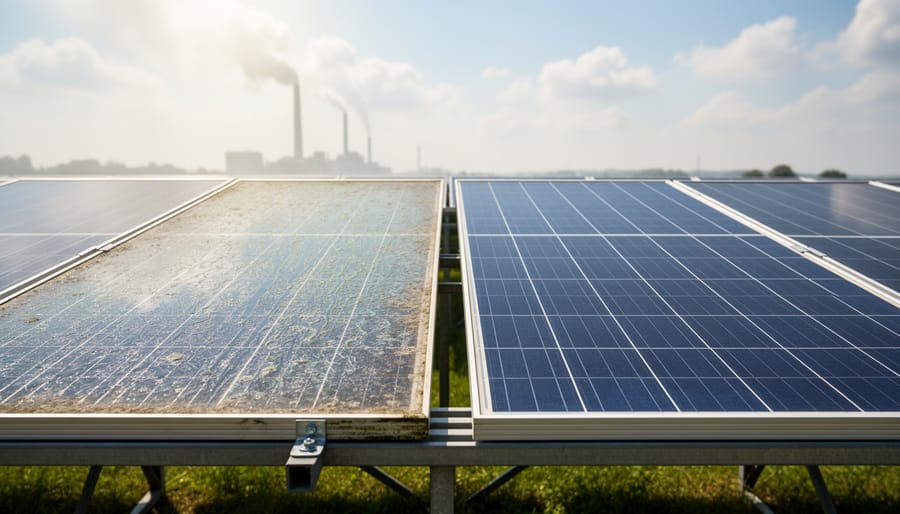
Pollutants add another dimension to panel degradation. Industrial regions in Central Europe expose panels to acidic compounds and particulate matter that etch protective surfaces. These contaminants create adhesion points for dirt and organic growth, reducing light transmission and energy output.
Mechanical stress from wind loads, hail, and snow accumulation further compromises panel durability. The freeze-thaw cycles common in Northern and alpine regions are particularly damaging, as water expands within microscopic cracks, progressively widening them.
These combined stressors explain why solar panels often underperform their projected lifespan. However, innovative coating technologies specifically engineered to combat these European climate challenges are transforming panel resilience and longevity, ensuring your solar investment delivers sustained performance for decades.
The Science Behind Advanced Coating Techniques
Protective Barrier Formation
Advanced coatings establish robust defence mechanisms through multi-layered protection strategies. These specialised layers form a physical shield that deflects moisture, dust, and pollutants before they reach the solar cell surface, while simultaneously creating chemical barriers that neutralise corrosive elements common in European climates—from coastal salt spray to industrial emissions.
The innovation lies in achieving this comprehensive protection without sacrificing light transmission. Modern protective material technologies utilise transparent formulations with anti-reflective properties, ensuring that over 95% of sunlight still reaches the photovoltaic cells beneath. This dual functionality addresses a critical challenge: panels must breathe and perform efficiently whilst remaining impervious to environmental threats.
The chemical composition of these barriers specifically targets degradation pathways unique to solar installations. Hydrophobic properties repel water accumulation that otherwise leads to microbial growth and potential delamination, whilst UV-stabilised compounds prevent the yellowing and brittleness that compromise older panel generations. For European installations facing varied seasonal conditions, this barrier formation delivers sustained performance across decades, maintaining both structural integrity and optimal energy conversion efficiency throughout the panel’s operational lifetime.
Self-Cleaning and Anti-Soiling Properties
Modern solar panels increasingly feature self-cleaning technologies that significantly reduce maintenance requirements while preserving peak performance. These innovative coatings leverage two primary mechanisms: hydrophobic properties and photocatalytic activity.
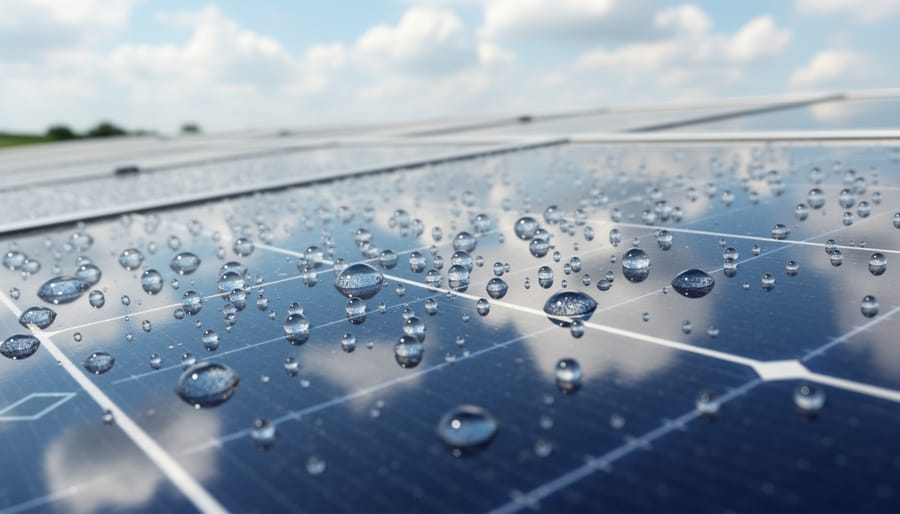
Hydrophobic coatings create an ultra-smooth surface where water forms tight droplets rather than spreading across the panel. When rain falls, these droplets roll off, carrying away dust, pollen, and other debris. This natural cleaning process maintains optimal light absorption without manual intervention, particularly valuable across European regions experiencing frequent rainfall.
Photocatalytic coatings take self-cleaning further by using sunlight to break down organic contaminants at a molecular level. Titanium dioxide-based coatings trigger a chemical reaction when exposed to UV light, decomposing bird droppings, atmospheric pollutants, and organic residues into easily washed-away substances. This technology proves especially beneficial in urban and industrial environments where air quality impacts panel cleanliness.
The combined effect delivers substantial advantages for European solar installations. Reduced cleaning frequency translates to lower operational costs and fewer disruptions to energy generation. For residential systems, this means less ladder work and safety concerns. Commercial installations benefit from decreased maintenance budgets while sustaining efficiency ratings. These anti-soiling properties ensure your solar investment maintains consistent performance throughout variable European weather conditions, maximizing long-term energy production and return on investment.
Four Advanced Coating Techniques Transforming Panel Longevity
Anti-Reflective Nanocoatings
Anti-reflective nanocoatings represent one of the most significant innovations in solar panel efficiency optimization. These microscopically thin layers, engineered at the nanometer scale, employ a sophisticated surface structure that fundamentally changes how light interacts with the panel’s protective glass.
The technology works through precisely arranged nano-structures that create a gradual transition in refractive index between air and glass. Rather than bouncing light away as untreated glass does, these coatings allow photons to penetrate more effectively into the photovoltaic cells beneath. This seemingly modest improvement translates into tangible results: efficiency gains of 2-4% across various lighting conditions.
For European homeowners and businesses, this percentage increase delivers meaningful long-term value. A typical residential installation might capture an additional 80-120 kWh annually per kilowatt installed, while commercial arrays see proportionally larger gains. The benefits extend beyond energy capture, as these coatings simultaneously provide enhanced surface protection against environmental factors prevalent across European climates.
Modern anti-reflective nanocoatings also incorporate self-cleaning properties, reducing maintenance requirements particularly valuable during extended periods of variable weather. The hydrophobic characteristics help water sheet off smoothly, carrying dust and debris with it. This dual functionality of maximizing light capture while protecting the investment makes nano-structured coatings an essential consideration when evaluating solar panel quality and long-term performance sustainability.
Hydrophobic and Oleophobic Coatings
Hydrophobic and oleophobic coatings represent a significant innovation in solar panel protection, particularly for installations across Europe’s diverse climate zones. These advanced surface treatments repel both water and oil-based contaminants, creating a self-cleaning effect that maintains optimal panel efficiency.
The technology works through microscopic surface structures that minimize contact with liquids and dirt particles. When rainwater hits the panel surface, it forms tight beads that roll off, carrying away dust, pollen, and industrial pollutants rather than spreading across the glass. This proves invaluable in European industrial zones where airborne contaminants can rapidly accumulate, and in coastal regions where salt spray poses persistent challenges.
For businesses operating in manufacturing districts or near maritime environments, these coatings deliver measurable sustainability benefits by reducing maintenance frequency and water consumption during cleaning. The oleophobic properties specifically combat oil-based residues from urban pollution and agricultural activities, which traditional hydrophobic coatings cannot adequately address.
Modern formulations combine both properties, creating dual-action protection that extends panel lifespan and maintains energy output. The efficiency gains become particularly apparent during Europe’s winter months when reduced daylight hours make every percentage point of power generation crucial. By preventing dirt accumulation between maintenance cycles, these coatings ensure your solar investment continues delivering optimal returns throughout varying seasonal conditions.
UV-Resistant Polymer Layers
Solar panels face constant bombardment from ultraviolet radiation, which gradually breaks down materials and compromises performance. Advanced UV-resistant polymer layers provide essential protection, forming a critical shield within modern panel construction.
These specialized formulations work through two primary mechanisms: absorption and reflection. UV-absorbing polymers contain carefully selected additives that capture harmful radiation before it penetrates deeper layers, converting the energy harmlessly into heat. Meanwhile, reflective coatings incorporate microscopic particles that bounce UV rays away from sensitive components entirely.
The innovation lies in achieving this protection without hindering visible light transmission. European manufacturers have developed polymer matrices that maintain over 95% transparency while blocking up to 99% of damaging UV wavelengths. This precision ensures maximum energy conversion efficiency alongside exceptional durability.
Delamination, where protective layers separate from solar cells, represents a primary failure mode in unprotected panels. UV-resistant polymers prevent this deterioration by maintaining their structural integrity and adhesive properties even after decades of sun exposure. For European installations, where panels must endure varying seasonal conditions, this stability translates directly into sustained energy output and reduced maintenance costs.
Modern formulations also incorporate sustainability considerations, using environmentally responsible materials that align with Europe’s circular economy principles while delivering superior protective performance throughout the panel’s operational lifetime.
Anti-Corrosion Protective Films
For solar installations across Europe, particularly near coastal regions or industrial zones, anti-corrosion protective films represent essential innovation in panel longevity. These specialized coatings form a defensive barrier against salt spray, industrial pollutants, and atmospheric contaminants that can severely compromise panel performance and structural integrity over time.
European coastal areas present unique challenges for solar technology. The North Sea, Atlantic, and Mediterranean environments expose panels to salt-laden air that accelerates oxidation and degradation of metal components. Similarly, industrial regions in Germany’s Ruhr Valley or northern Italy face elevated levels of sulfur dioxide and other corrosive compounds that attack panel surfaces.
Modern anti-corrosion films utilize advanced polymer chemistry combined with nano-particle technology to create impermeable barriers. These coatings typically incorporate zinc-rich compounds or ceramic elements that actively prevent moisture and oxygen from reaching vulnerable metal surfaces. The result is significantly enhanced durability, with some treatments extending panel lifespan by 5-10 years in harsh environments.
The efficiency benefits extend beyond mere protection. By preventing micro-corrosion on frame components and junction boxes, these films maintain optimal electrical connections and prevent hotspots that reduce energy output. For European homeowners and businesses investing in solar infrastructure, anti-corrosion coatings represent intelligent risk management, ensuring sustainability goals aren’t compromised by environmental factors.
Real-World Performance: What the Data Shows
Recent field studies across European installations reveal compelling evidence for the effectiveness of advanced coating technologies. A comprehensive 2023 study tracking over 500 solar installations in Germany, the Netherlands, and Spain found that panels with hydrophobic anti-soiling coatings maintained 94-97% of their original efficiency after five years, compared to 85-89% for uncoated equivalents under identical conditions.
The data becomes even more striking when examining specific environmental challenges. In coastal Belgian and Danish installations, where salt deposits traditionally accelerate degradation, anti-corrosion coatings extended panel lifespan by an estimated 8-12 years. This translates to significant ROI improvements, with breakeven periods reduced by 18-24 months for commercial applications.
Field measurements from agricultural regions in France and Poland demonstrate that anti-soiling coatings reduced cleaning frequency requirements by 60-70%, cutting maintenance costs substantially whilst maintaining peak performance. When combined with weather-resistant mounting systems, these installations showed remarkable resilience through harsh winters and summer heat waves.
A particularly noteworthy case study from a Swedish industrial facility reported that UV-protective coatings prevented the typical 0.7% annual degradation rate, keeping efficiency losses below 0.3% annually. Over a 25-year operational period, this seemingly modest difference compounds to approximately 10% more cumulative energy production.
Financial analysis across these case studies indicates that whilst advanced coatings add 3-5% to initial installation costs, they deliver 15-22% improvements in total lifetime value through enhanced efficiency retention, reduced maintenance needs, and extended operational life. For European solar investors prioritising long-term sustainability and performance, this data strongly supports coating technology adoption as a sound financial and environmental decision.
Application Methods That Matter
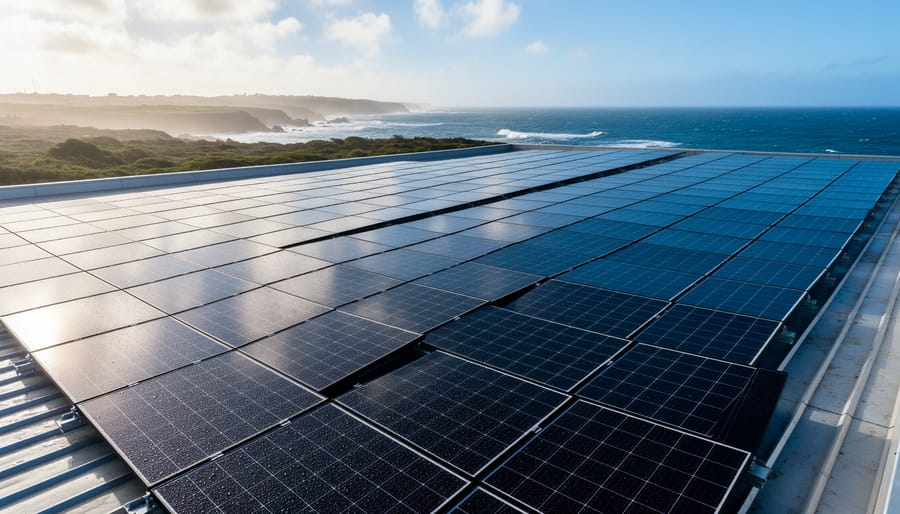
The method used to apply advanced coatings directly influences their protective capabilities and longevity. Understanding these application techniques helps explain why premium solar panels deliver superior performance over decades of European weather exposure.
Spray coating remains one of the most common methods, using atomized particles to create uniform layers across panel surfaces. This technique allows precise thickness control and works particularly well for anti-reflective coatings. Modern spray systems achieve consistent coverage even on textured surfaces, ensuring every millimeter receives adequate protection against moisture and environmental contaminants.
Dip-coating offers exceptional uniformity for certain coating types. Panels are submerged in specialized solutions, creating seamless protective barriers without gaps or weak points. This method excels for hydrophobic treatments that repel water and reduce cleaning requirements—a valuable feature for northern European climates with frequent rainfall.
Vapor deposition represents the pinnacle of coating innovation, particularly for high-performance applications. This process deposits molecular-thin layers in controlled vacuum environments, creating incredibly durable bonds at the atomic level. Chemical vapor deposition and physical vapor deposition techniques produce coatings with outstanding scratch resistance and optical properties that maximize light transmission.
Application quality matters immensely for long-term performance. Poorly applied coatings develop microscopic defects that allow moisture infiltration, eventually compromising panel efficiency and structural integrity. Professional-grade application ensures consistent thickness, proper adhesion, and complete surface coverage—factors that distinguish truly advanced solar solutions from standard offerings. For European installations facing diverse weather patterns, meticulous application processes translate directly into sustained energy production and reduced maintenance costs over your solar investment’s lifetime.
Choosing the Right Coating for Your Installation
Selecting the appropriate coating technology for your solar installation requires careful consideration of your local environment and specific project demands. European climates present diverse challenges—from the salt-laden coastal air of Mediterranean regions to the harsh winter conditions across Scandinavia—and your coating choice should reflect these realities.
Start by evaluating your location’s primary environmental stressors. Coastal installations benefit most from corrosion-resistant hydrophobic coatings that repel moisture and salt deposits, while urban environments with higher pollution levels demand coatings with superior anti-soiling properties. For regions experiencing significant temperature fluctuations, thermal stability becomes the critical factor in maintaining long-term efficiency.
Consider your maintenance capacity and budget constraints. Advanced nanostructured coatings may require higher initial investment but deliver substantial returns through reduced cleaning frequency and extended panel lifespan. For commercial installations where downtime directly impacts revenue, self-cleaning coatings offer compelling operational advantages despite premium pricing.
INOX Solar’s expertise lies in matching these sophisticated coating technologies to your unique circumstances. Our technical team conducts thorough site assessments, analyzing local weather patterns, installation angles, and surrounding environmental factors to recommend the optimal coating solution. This personalized approach ensures you’re not simply receiving a standard product, but rather a tailored system designed for maximum performance in your specific European location.
Beyond coating selection, successful solar projects require integrated planning. INOX Solar provides complete solar installation solutions that harmonize advanced coating protection with robust mounting systems and comprehensive support services. This holistic approach guarantees your investment delivers consistent, reliable energy production throughout its operational lifetime, backed by proven expertise in European solar applications.
The INOX Solar Advantage in Coating Innovation
At INOX Solar, we recognize that advanced coating technology represents more than just surface treatment—it’s a fundamental commitment to delivering solar solutions that perform exceptionally throughout their entire lifecycle. Our approach integrates the latest coating innovations into every product we offer, ensuring European customers receive panels engineered for the continent’s diverse climate conditions.
Quality assurance sits at the heart of our coating process. Each panel undergoes rigorous testing protocols that verify coating uniformity, adhesion strength, and long-term durability under simulated European weather patterns. From the persistent moisture of coastal regions to the temperature extremes of continental climates, our coated panels demonstrate consistent performance backed by comprehensive warranties.
What distinguishes our offering is the complete project support we provide. Beyond supplying premium coated panels, we guide customers through every phase—from initial assessment and system design to installation partnerships and ongoing maintenance recommendations. Our technical teams understand that choosing solar technology involves significant investment, which is why we ensure you have access to expertise that helps maximize your return.
Sustainability drives our coating innovation strategy. We prioritize environmentally responsible coating materials and application methods that minimize waste while maximizing efficiency. This commitment aligns perfectly with European environmental standards and the broader transition toward clean energy solutions.
By choosing INOX Solar, you’re partnering with a company that views advanced coatings not as an optional feature, but as essential protection for your solar investment and contribution to a sustainable energy future.
Advanced coating techniques represent far more than a manufacturing detail—they’re the frontline defense protecting your solar investment against Europe’s diverse climate challenges. From the humid coastal regions to areas experiencing temperature extremes, the quality of anti-reflective and protective coatings directly influences your system’s efficiency, longevity, and return on investment.
When evaluating solar panels, asking detailed questions about coating specifications distinguishes informed buyers from those making purely price-driven decisions. Understanding whether panels feature hydrophobic properties, scratch-resistant formulations, or advanced self-cleaning capabilities helps you assess true long-term value rather than initial cost alone.
At INOX Solar, we’ve built our reputation on uncompromising quality and innovation. Our panels incorporate cutting-edge coating technologies designed specifically for European conditions, ensuring maximum energy capture while requiring minimal maintenance. Combined with our comprehensive project support—from initial consultation through installation and beyond—we provide solutions that deliver sustained performance year after year.
Your solar investment deserves protection that matches its potential. Explore how INOX Solar’s advanced coating technologies safeguard your sustainability goals while maximizing efficiency across decades of reliable operation.
Leave a Reply